
A crochet gauge swatch is a sample made with the yarn, hook and stitch pattern planned for a project. Its stitch and row counts predict the finished width, length, fit and fabric before you commit to the full piece.
Make the sample larger than the measuring area, finish it as the project will be finished and count in the center. If the count misses the pattern gauge, change the hook and swatch again rather than forcing your tension.
What a Crochet Gauge Swatch Measures
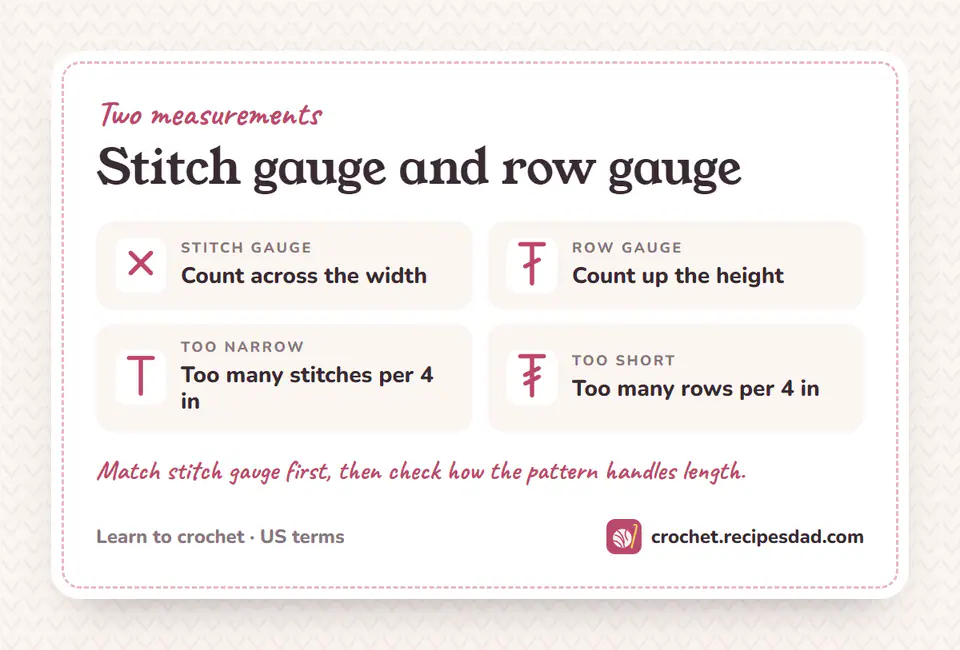
A pattern might state “16 sc and 18 rows = 4 in (10 cm).” That means a four-inch square in the stated stitch should contain 16 stitches across and 18 rows vertically after the swatch is finished as directed. The hook size listed beside the gauge is a starting point; the measured fabric decides whether it is correct for you.
Stitch gauge controls width. Row gauge controls length. Both can affect fit, shaping and yarn use, although some patterns tell you to work to a measurement instead of a fixed number of rows.
How to Make a Crochet Gauge Swatch
- Use the project materials. Swatch with the same yarn, hook material and stitch pattern planned for the finished item.
- Make extra fabric. If gauge is measured over 4 in (10 cm), make a square larger than that area so the edge stitches do not affect the count.
- Work naturally. Sit and crochet as you normally would. Do not pull each stitch tighter just to reach the printed number.
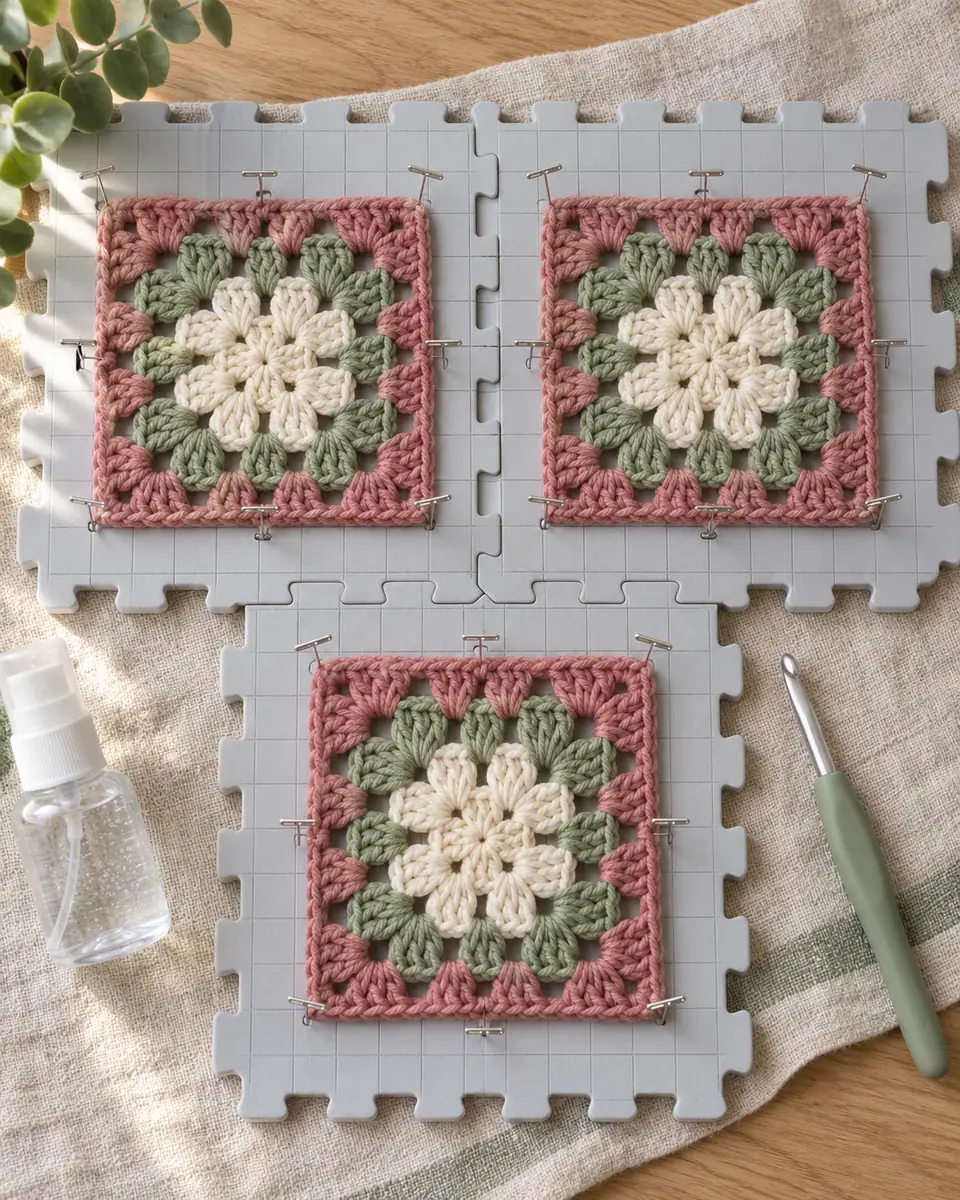
- Finish the sample. Wash, dry and block it in the same way the finished project will be treated, unless the pattern specifically directs otherwise.
- Let it settle. Measure only after the swatch is dry and relaxed.
A textured, lace or colorwork project should be swatched in that pattern stitch, not in plain single crochet. If the project is worked in the round, swatch in the round when the pattern requests it because tension can differ from flat rows.
How to Measure a Crochet Gauge Swatch
Lay the dry sample on a flat surface without pinning or stretching it. Put a rigid ruler across the center and count every full stitch inside the measurement. Include a half stitch when the ruler ends halfway through one. Measure rows vertically in another central area.
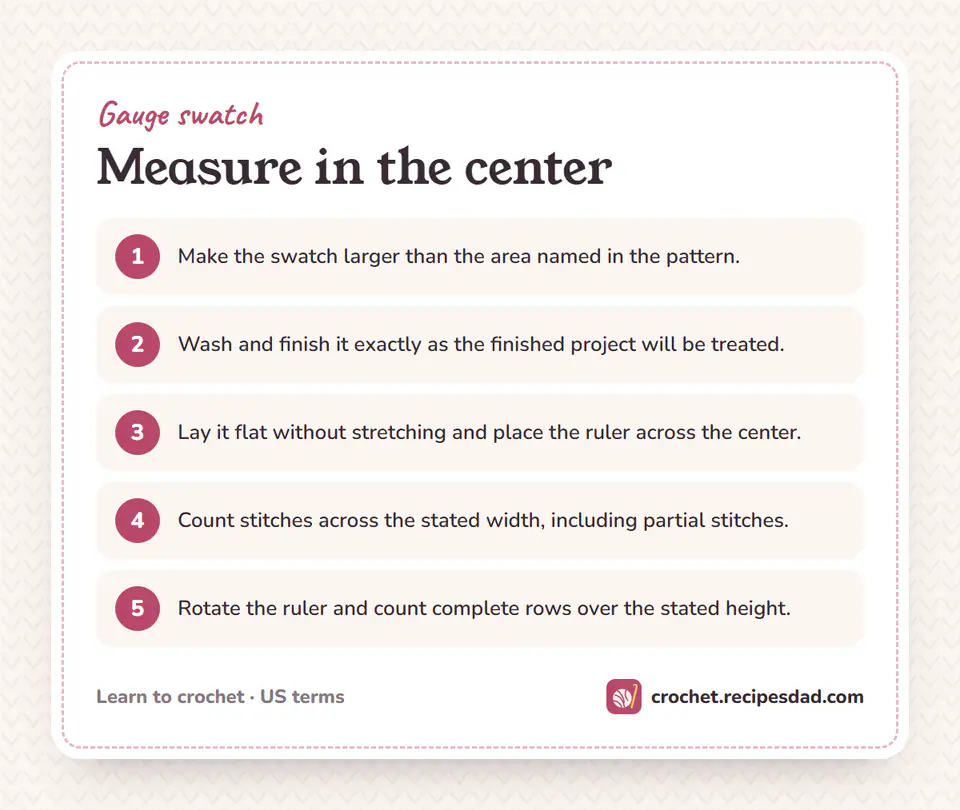
Measure more than one area if the fabric varies, then use the average. A larger measuring span reduces the effect of one unusually wide stitch. Do not include the foundation edge, turning edge or final row unless the pattern tells you to measure there.
Measure before and after washing
Record both numbers when the fiber may relax, bloom or shrink. The finished measurement is the one that predicts the final size, but the before-washing number helps you recognize when the project is on track while you crochet it.
How to Fix Crochet Gauge
Compare your stitch count with the pattern over the same distance. More stitches in that width means each stitch is too small, so try a larger hook. Fewer stitches means each stitch is too large, so try a smaller hook. Change one hook size at a time and make a new sample.
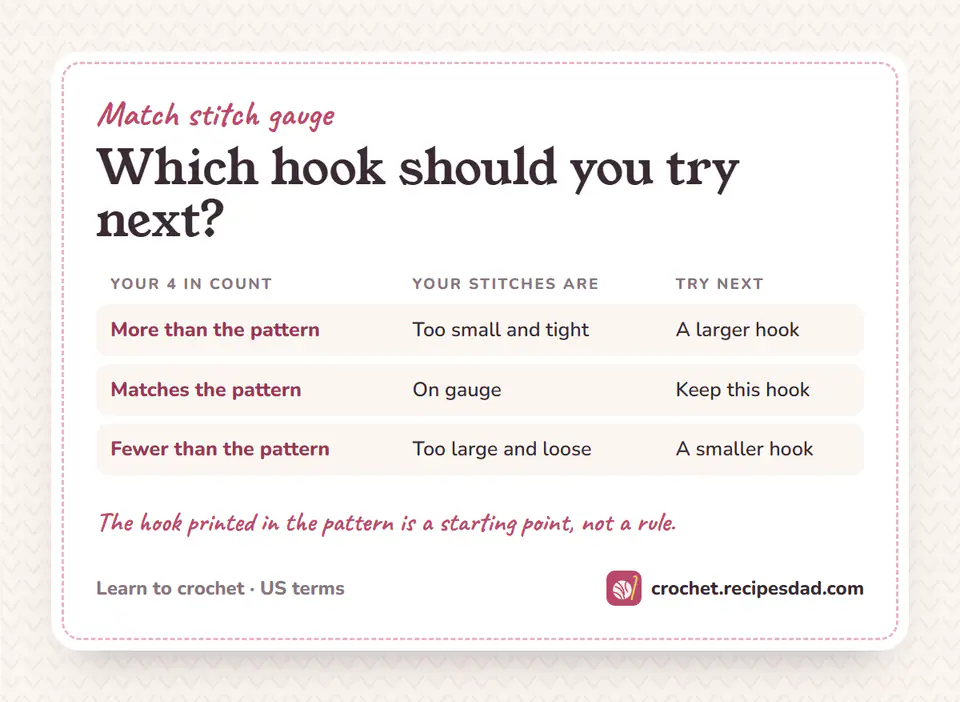
Do not force your hands to maintain an uncomfortable tension. A hook change is easier to repeat over a full project. If the correct stitch count produces fabric that is too stiff or too loose, the yarn may not suit that pattern even when its weight category looks right.
When stitch gauge matches but row gauge does not
Keep the hook that gives the correct width, then read how the pattern controls length. You may be able to add or remove rows when it says “work until the piece measures,” but fixed armholes, neck shaping and motif joins need more care. Use the designer's adjustment notes or recalculate the row placement before changing a shaped section.
Crochet Gauge Swatch Math
Divide the stitch count by the measured width to find stitches per inch or centimeter. Multiply that rate by the desired finished width. Then adjust the result to the stitch multiple required by the pattern.
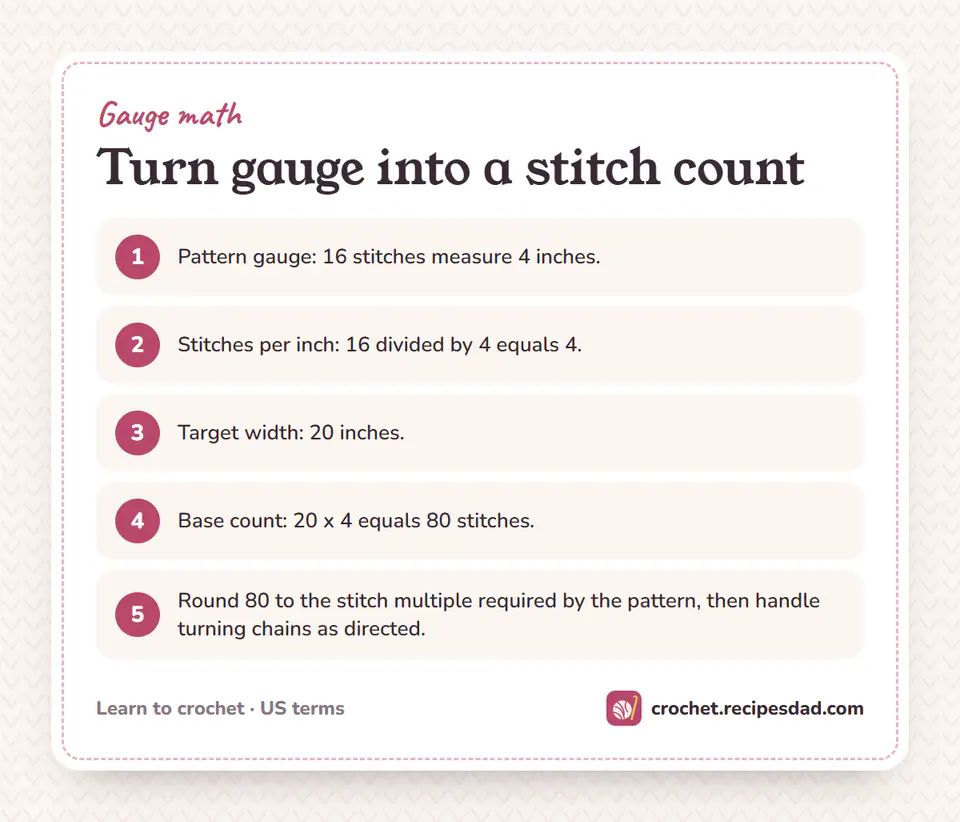
Example: 16 stitches over 4 inches equals 4 stitches per inch. A 20-inch panel needs a base count of 80 stitches. If the stitch pattern uses a multiple of 6 plus 2, choose the nearest valid count that gives the intended width, and treat turning chains exactly as the instructions specify.
The same calculation predicts finished size. Divide the project's stitch count by your measured stitches per inch. If 88 stitches are worked at 4 stitches per inch, the fabric should measure about 22 inches before borders or seaming.
When Gauge Matters Most
- Garments and hats: a small difference repeated across many stitches can change the fit.
- Motifs that must join: every square or shape needs compatible dimensions.
- Home decor with a fixed insert: pillow covers, baskets and fitted pieces need the planned size.
- Projects with limited yarn: a looser gauge can use more yarn and produce a larger piece.
Gauge may be less critical for a scarf, dishcloth or toy when the pattern says exact size is not important. A crochet swatch still shows the fabric's drape, stitch definition and gaps before you commit to the full project.
Common Gauge Problems
- The sample is exactly four inches wide. Edge stitches distort the count; make a larger sample and measure the center.
- The unwashed sample matches. Fibers can change after washing, so compare the finished sample.
- The hook label matches the pattern. Hook labels do not guarantee that two crocheters make the same stitch size.
- Only width was checked. Row gauge can move shaping and change the length.
- The stitch pattern is different. Plain sc cannot predict the gauge of lace, cables or a dense colorwork pattern.
If you need a different hook, use the exact millimeter diameter rather than relying only on a letter. The crochet hook size chart compares metric and US labels, and the yarn weight guide shows the standard hook ranges used as starting points.
Frequently Asked Questions
How big should a crochet gauge swatch be?
Make it larger than the area the pattern asks you to measure. For a 4-inch gauge, leave enough extra fabric to count in the center away from every edge.
Do I wash a crochet gauge swatch before measuring?
Yes, when the finished project will be washed or blocked. Treat the swatch the same way, let it dry fully and use that finished measurement.
What if I have too many stitches in four inches?
Your stitches are too small for the pattern gauge. Try a larger hook, make another swatch and measure it after finishing.
What if I have too few stitches in four inches?
Your stitches are too large for the pattern gauge. Try a smaller hook, then make and finish a new swatch.
Should I match stitch gauge or row gauge first?
Match stitch gauge first because it controls width and fit. Then check row gauge and follow the pattern directions for adjusting length or shaping.
Can I measure gauge on the project instead?
You can recheck gauge on a large section, but a separate swatch reveals problems before much yarn and time are committed.
Reference Source
The hook-adjustment guidance follows the Craft Yarn Council hooks and needles standard, which recommends a smaller hook when a swatch is too large and a larger hook when it is too small.

Clara Parker
I’m Clara — a mom who is never without a hook, and the crochet half of the Recipes Dad family. I write cozy, practical patterns you can actually finish.
More about Clara
Maker notes
Made this pattern? Tell us about your yarn and colors, or ask a question about a row — Clara reads every note.