
Blocking crochet is the finishing step that makes stitches even, edges straight and squares all the same size. You dampen the piece with water or steam, pin it to the right shape and let it dry. This lesson shows wet, spray and steam blocking step by step, which one to use for cotton, wool and acrylic, and how to block granny squares so they join without puckering.
Why Blocking Crochet Is Worth the Time
Crochet stitches are knots, and fresh off the hook they sit a little crooked. Water or steam lets the fibers relax, and pinning them while they dry sets them in the shape you choose. Blocking evens out small differences in tension, opens up lace, straightens the edges of squares so they are all the same size, and turns a curling edge into a flat one. It does not fix a wrong stitch count, though: if a piece ruffles because it has too many stitches, blocking only hides it until the next wash.
What You Need
- A blocking board. Interlocking foam mats with a printed grid are the usual blocking board. Crochet squares, shawls and scarves all fit on them, and the grid makes measuring easy. A folded towel on a bed or a carpet works for one small piece.
- Rust-proof pins. T-pins or long stainless steel pins. Ordinary pins can rust and leave marks on damp yarn.
- Blocking wires (optional) for long straight edges, such as the sides of a shawl.
- A bowl or sink, a mild wool wash or soap, and two clean towels for wet blocking.
- A spray bottle for spray blocking, or a steam iron for steam blocking.
- A tape measure and the finished size from the pattern.
Choose the Method for Your Fiber
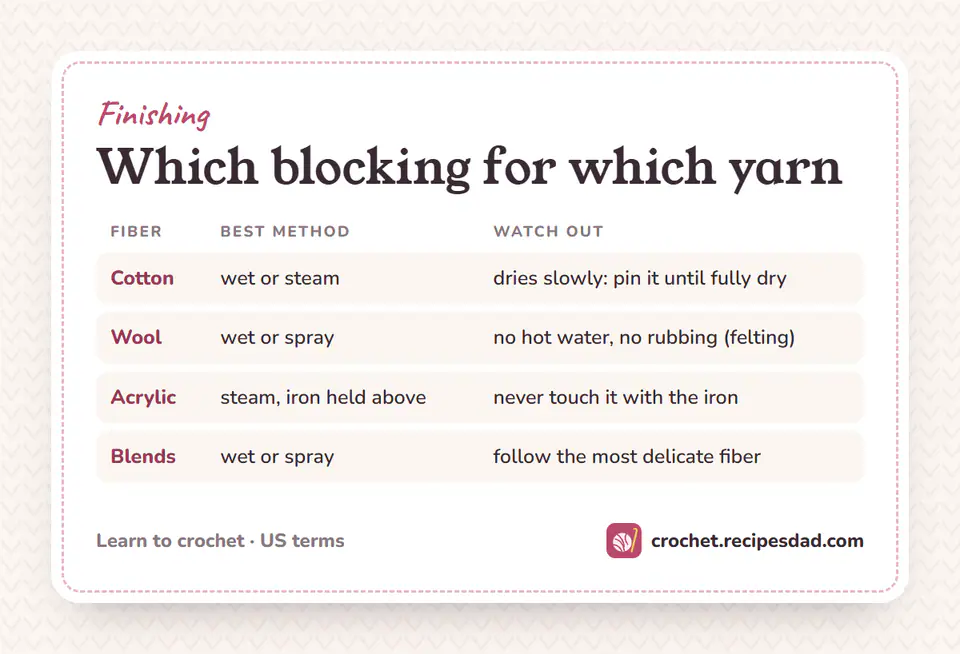
Look at the fiber on the yarn label before anything else. Wool, cotton and acrylic react to water and heat in very different ways, and the wrong method can ruin a piece. The yarn weight guide explains the rest of the label.
How to Wet Block Crochet
Wet blocking gives the strongest result and is the one to use for wool, cotton and most blends. It takes a day or two to dry, so plan for it.
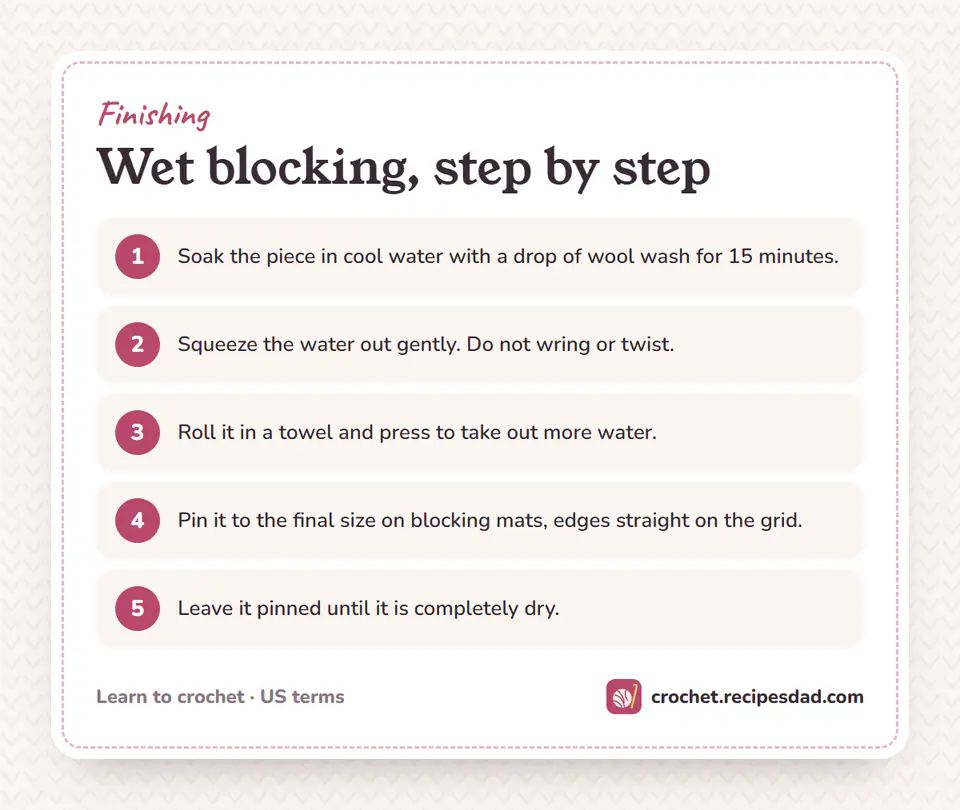
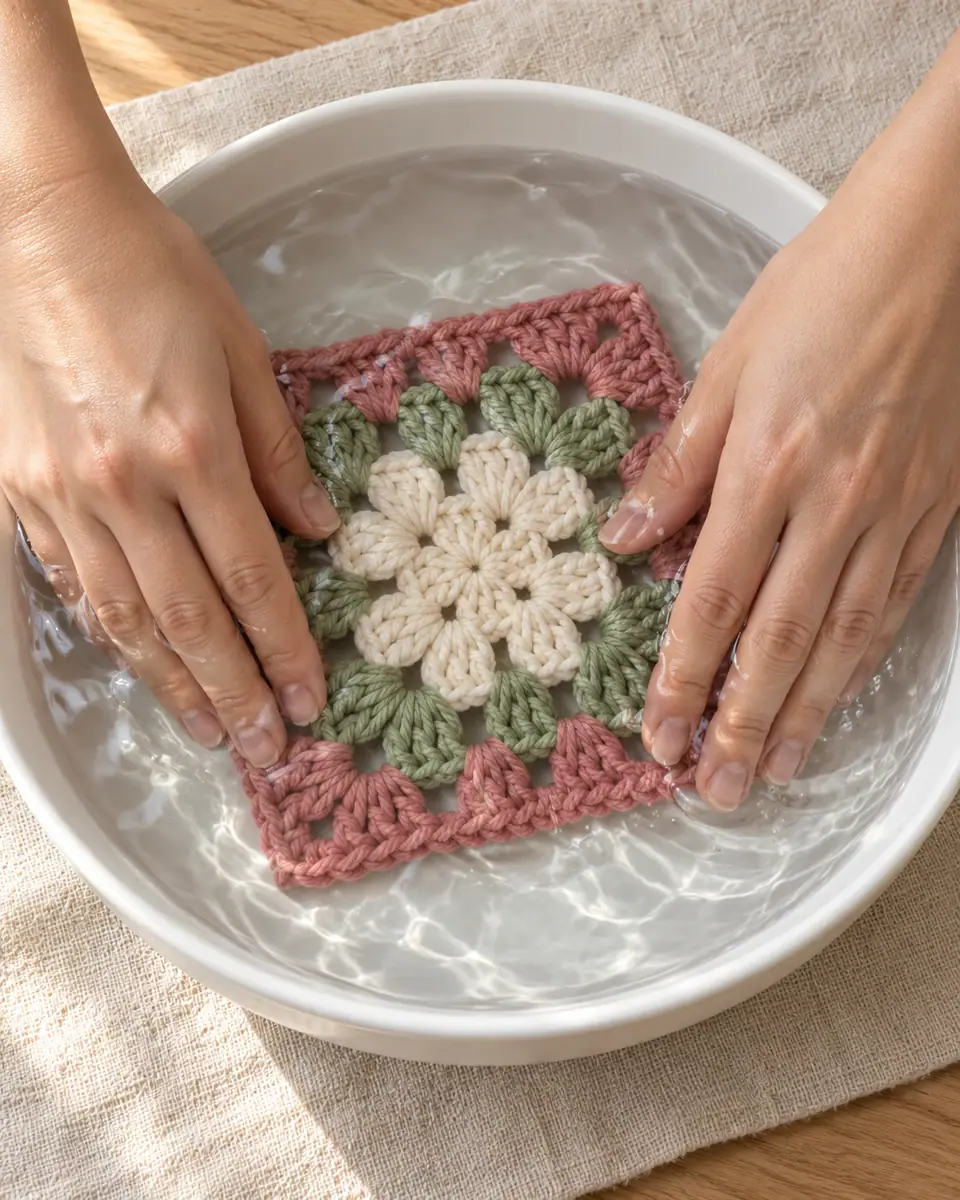
- Soak. Fill a bowl with cool water and a drop of wool wash, put the piece in and press it under gently. Leave it for 15 minutes so the water gets right into the fibers.
- Squeeze. Lift it out with both hands under it, so the weight of the water does not stretch it, and squeeze gently. Do not wring or twist.
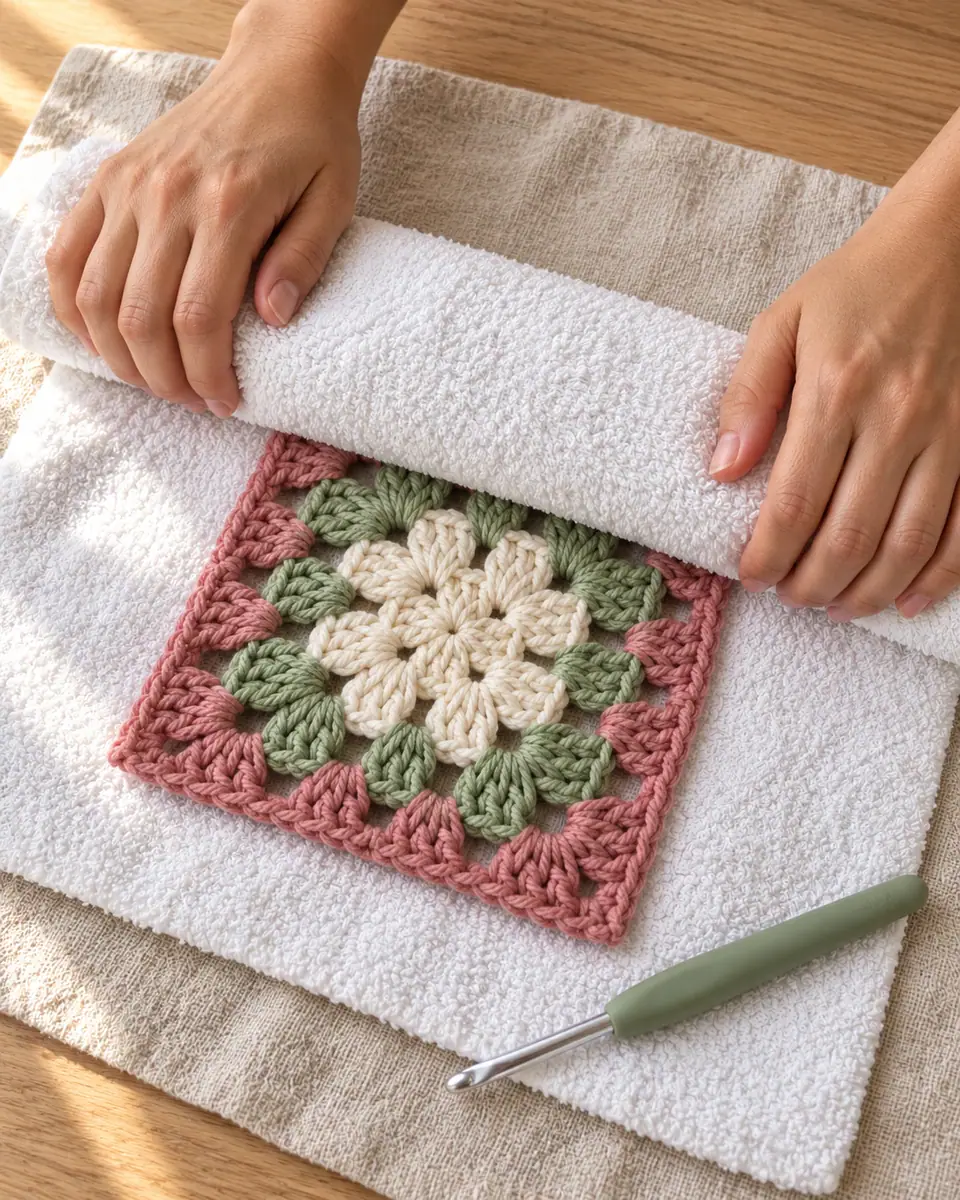
- Roll in a towel. Lay it flat on a dry towel, roll the towel up with the piece inside and press along the roll. This takes out most of the remaining water.
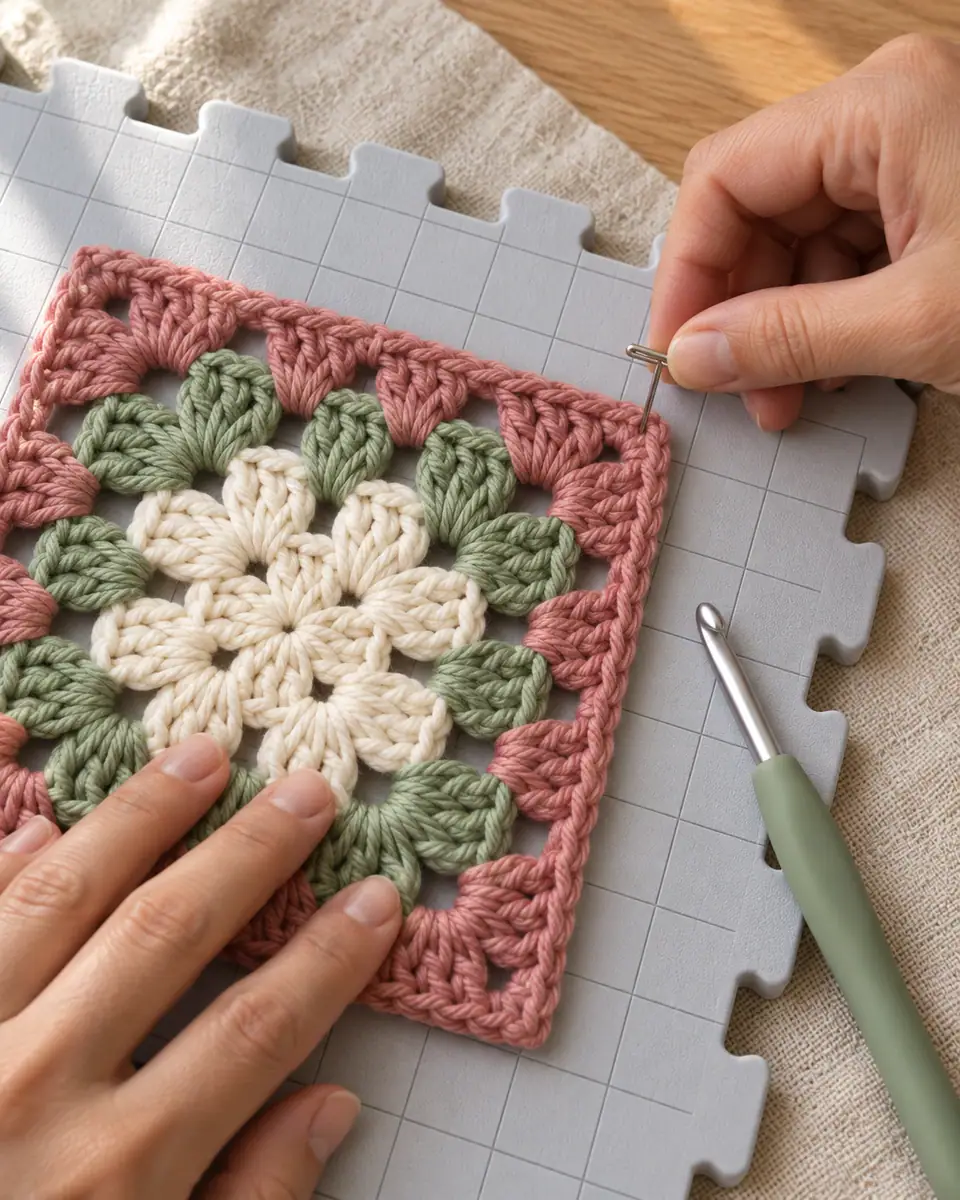
- Pin to size. Lay the damp piece on the blocking board, measure it, and pin the corners first, then the middle of each side, then the points in between. Line the edges up with the grid.
- Let it dry. Leave it pinned until it is completely dry, even inside the thickest stitches. Cotton can take a day or longer.
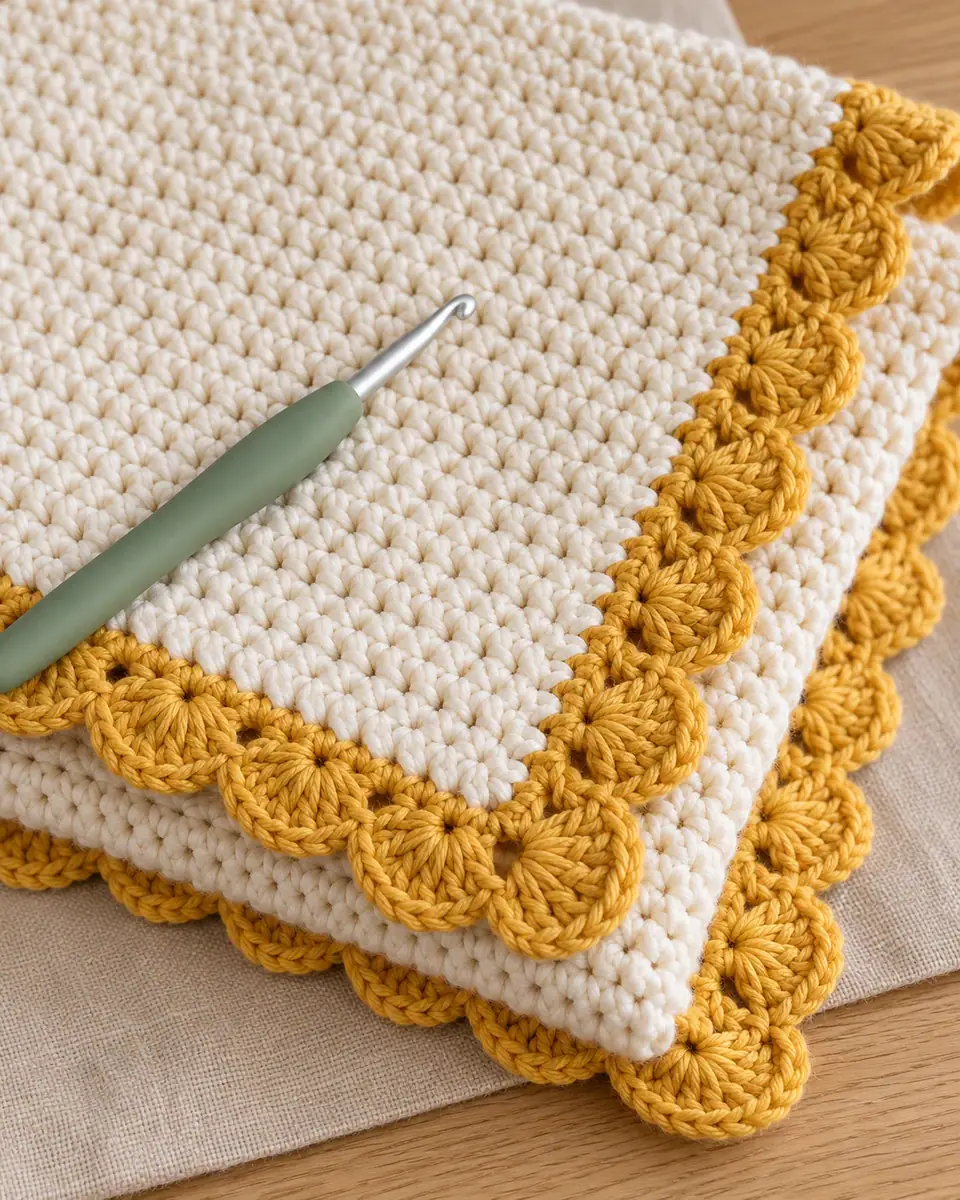
The tulip border placemat is blocked this way: soaked, rolled in a towel and pinned to a 15 in (38 cm) circle with one pin in each of its 20 picots, so the shells dry as even scallops.
Spray Blocking
Spray blocking is gentler and quicker. It suits small pieces, wool you do not want to soak, and anything that only needs a little straightening.
- Pin the dry piece to size on the blocking board.
- Mist it with cool water until it is damp all the way through, not dripping.
- Pat it lightly with your hand so the water soaks in, and adjust the pins if an edge moved.
- Leave it pinned until it is dry.
This is all the crochet heart needs if one curls: pinned flat, sprayed with water and left to dry.
Steam Blocking
Steam works fast and is the safest way to block acrylic, as long as the iron never touches the yarn.
- Pin the dry piece to size on a heat-safe surface. Foam mats can take a little steam, but not the iron itself.
- Hold the steam iron about 1 in (2.5 cm) above the fabric and let the steam go through it for a few seconds. Move along the whole piece.
- Do not press, and do not let the iron rest on the yarn.
- Let the piece cool and dry completely before you take the pins out.
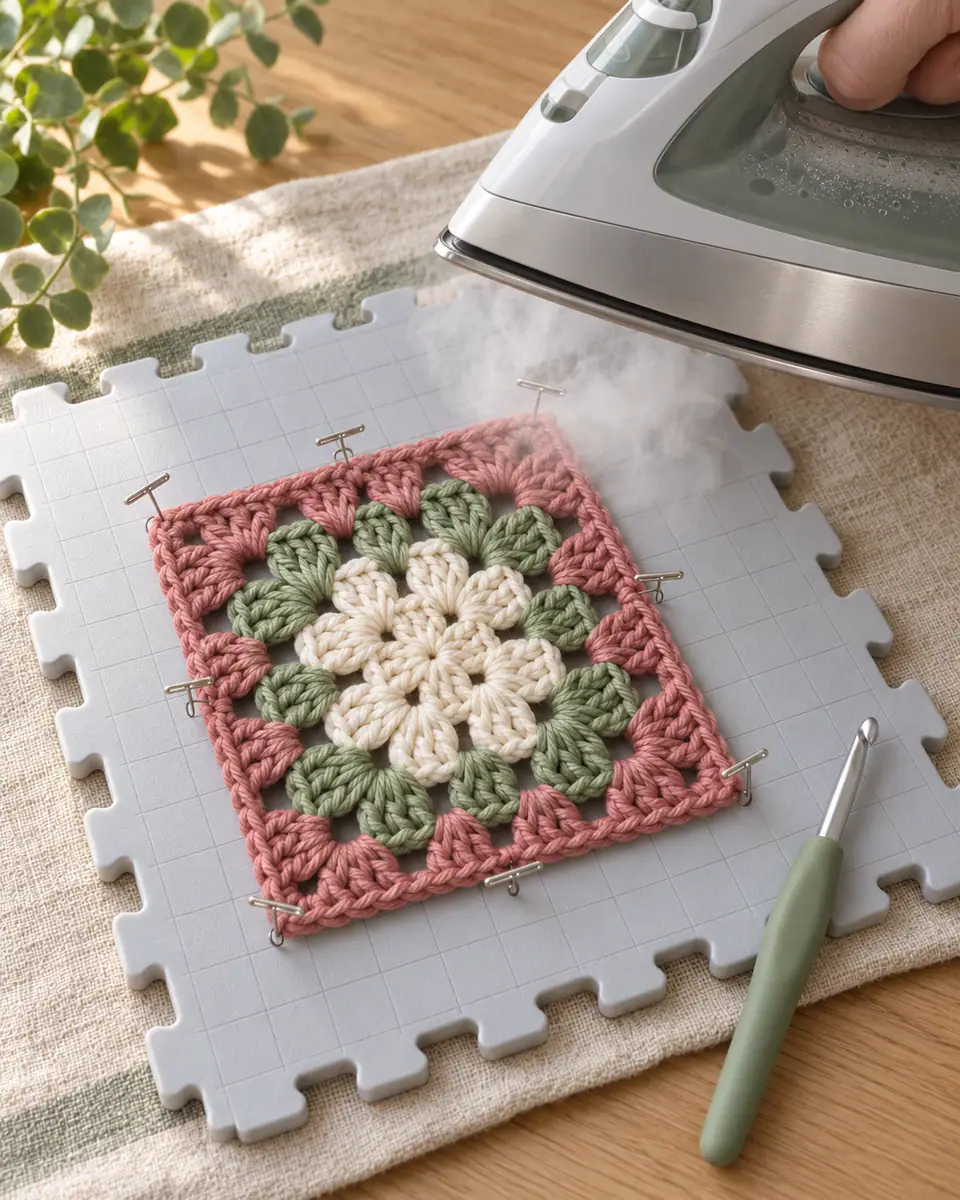
Be careful with acrylic. Heat relaxes it for good, which crocheters call “killing” the yarn. A little steam softens the drape nicely; too much leaves the fabric limp and stretched, and that cannot be undone. Try it on your gauge swatch first.
Blocking Granny Squares
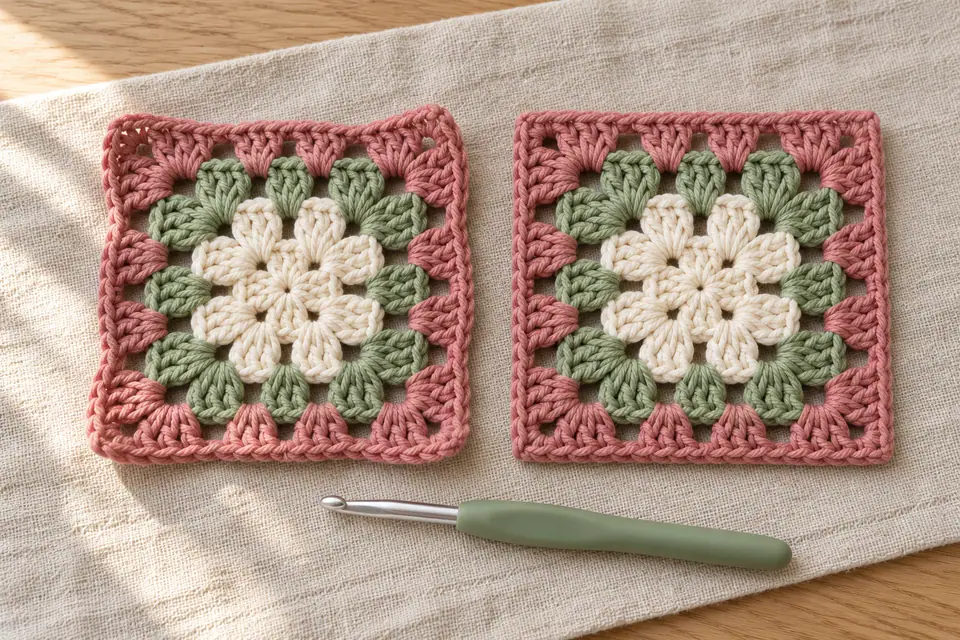
Blocking granny squares before you join them is the single best thing you can do for a blanket. Squares that come out a little different in size become identical on the board, and the seams line up stitch for stitch.
- Measure the size the pattern gives. Mark it on your blocking board with pins or use the grid.
- Pin each square at the four corners first, then pull the sides straight and pin the middle of each side.
- Block several squares at once, side by side, and let them dry before you unpin them.
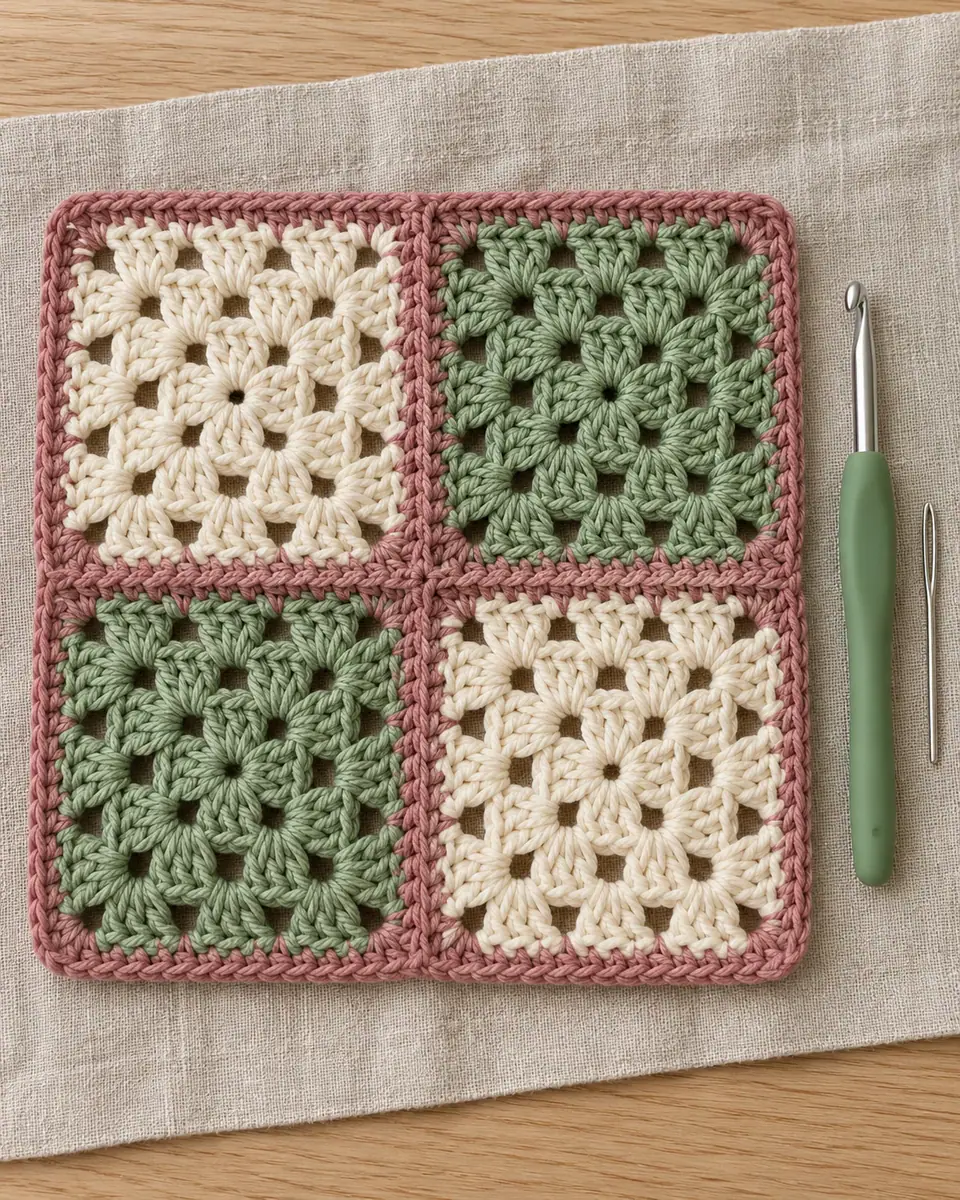
The sunflower granny square is pinned at 6½ in (16.5 cm) on each side with the corners square, misted and left to dry. After that, joining them is easy; see seaming crochet.
Can You Block a Crochet Blanket?
Yes. To block a crochet blanket, lay foam mats on the floor or use a bed covered with towels, and work in sections. A whole blanket is heavy when wet, so spray blocking or steam blocking is often more practical than a full soak. Make sure it dries completely before you fold it away.
Common Blocking Mistakes
- Felted wool. Hot water, rubbing or a sudden change from warm to cold water makes wool fibers lock together and shrink. Use cool water and only press, never rub. Blocking wool crochet is very rewarding when you treat it gently.
- Killed acrylic. The iron touched the yarn, or it was steamed too long. The piece goes flat and loses its spring. Always hold the iron above it.
- Rust marks. The pins were not rust-proof. Use stainless steel or T-pins made for blocking.
- Scalloped edges. Too few pins along a straight side. Use more pins, or a blocking wire.
- Unpinned too early. A piece that is still damp inside shrinks back. Wait until it is fully dry.
Blocking is usually the last step before an edging or before joining. For the basics behind it all, start with how to crochet, or browse every lesson in Learn to Crochet.
Frequently Asked Questions
Do you have to block crochet?
No, but most pieces look better blocked. Granny squares, lace, shawls and anything that has to match a size benefit the most; a toy or a bag usually does not need it.
Can you block acrylic crochet?
Yes, with steam. Hold the iron above the pinned piece and never let it touch the yarn. Wet blocking does little to acrylic, and direct heat ruins it.
How long does blocking crochet take to dry?
A small spray-blocked piece dries in a few hours. A wet-blocked cotton or wool piece can take a day or more, depending on the room and the thickness.
What can I use instead of a blocking board?
A folded towel on a bed, a carpet or an ironing board works for small pieces. For many squares, foam mats with a grid save a lot of measuring.
Does blocking last after washing?
Mostly, if you dry the piece flat and pull it into shape while it is damp. Wool holds its blocked shape best; cotton may need to be reshaped after each wash.

Clara Parker
I’m Clara — a mom who is never without a hook, and the crochet half of the Recipes Dad family. I write cozy, practical patterns you can actually finish.
More about Clara
Maker notes
Made this pattern? Tell us about your yarn and colors, or ask a question about a row — Clara reads every note.