
Learning how to read crochet patterns starts with the structure, not memorizing every shortened term. Start with the materials, gauge and notes. Then work one row or round at a time and compare your stitch count with the number at the end of the line.
This guide follows that order and decodes one complete round. Separate references cover abbreviations, gauge and stitch charts in depth, so each question has one clear page instead of repeated explanations.
Pattern Overview Before the First Stitch
A crochet pattern is written in a fixed order, and the parts before the first round matter as much as the rounds themselves. Read it from top to bottom once, with a pencil, before you make the slip knot. Most mistakes that show up halfway through a project were explained in the notes at the top.
- Skill level. Beginner, Easy, Intermediate or Experienced. It tells you whether you will meet new techniques.
- Materials. The yarn weight and amount, the hook size and any extras such as stitch markers, safety eyes or buttons.
- Gauge and finished size. How many stitches and rows fit in 4 in (10 cm), and how big the piece will be if you match it.
- Abbreviations and special stitches. The stitches the pattern uses, and step-by-step instructions for anything unusual.
- Pattern notes. Whether you work in rows or rounds, whether the rounds are joined or worked in a spiral, and whether the turning chain counts as a stitch.
- The instructions, round by round or row by row, usually followed by assembly and finishing.
Check the Pattern's Terminology
Written patterns shorten stitch names and actions, but US and UK terminology assign different names to several of the same stitches. Look for an explicit terminology note and consult the pattern's own key before using a general reference.
All Crochet Mom patterns use US terms. Keep the complete crochet abbreviations guide open for stitch names, actions, symbols and punctuation, or use the US to UK stitch converter when the terminology needs to be changed.
How to Read Crochet Patterns, Line by Line
Each line of a pattern is one round or one row. It starts with its number (Rnd 3, Row 12), then gives the stitches in order, and usually ends with a number in parentheses: the stitch count you should have when the line is finished.
Brackets, asterisks and counts
The punctuation is how a pattern saves space. Parentheses and asterisks mark repeats; a group of stitches with no “next” between them all go into the same place.
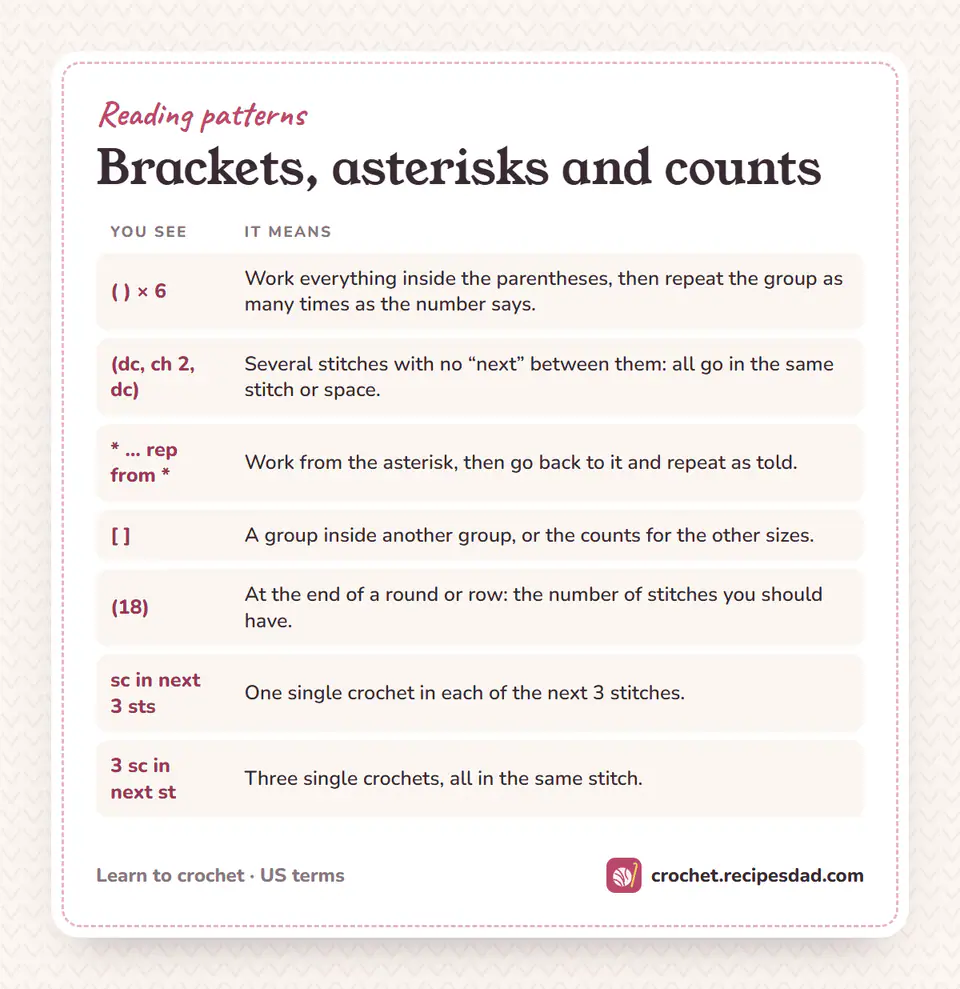
When you see an asterisk, look ahead for the words “rep from *” before you start the round. They tell you how many times to work the section and sometimes where to stop on the last repeat, which is easy to miss if you read as you go.
One round, decoded
Here is a typical round from an amigurumi pattern, the kind used for the head of our crochet bunny, taken apart one instruction at a time:
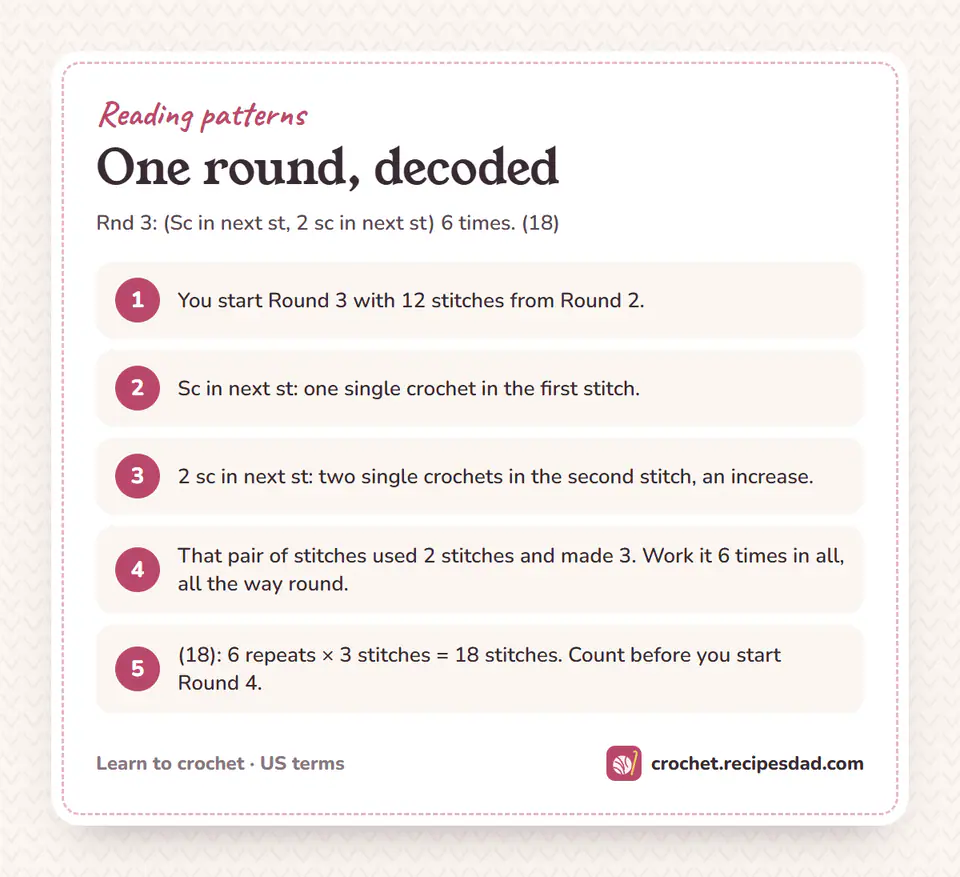
Once you can read that round, you can read most rounds. The pattern only changes the numbers: Round 4 might say (sc in next 2 sts, 2 sc in next st) 6 times, for 24 stitches. If the increases and decreases are new to you, the lesson on increases and decreases (sc2tog) shows both with photos.
Repeats you can see in the work
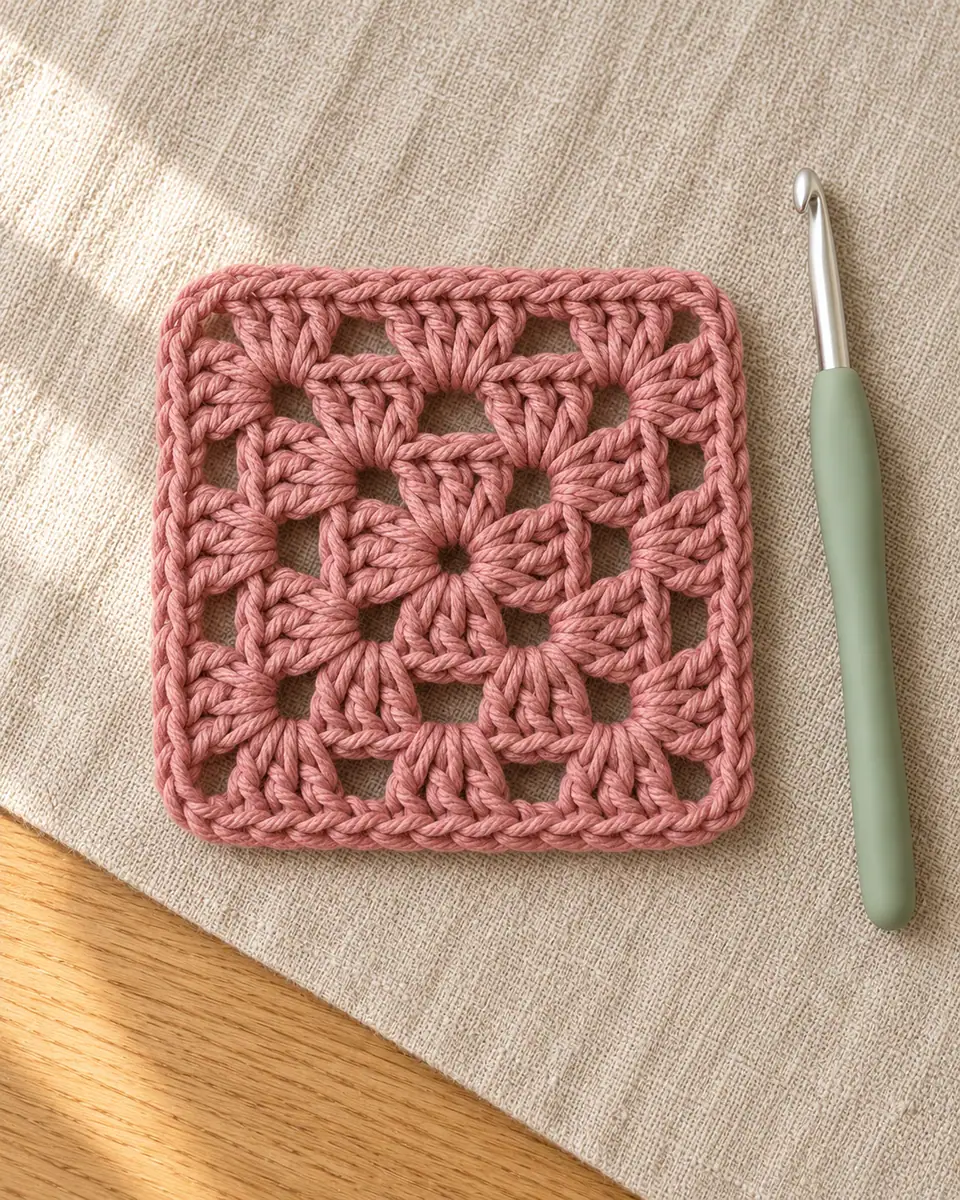
In many patterns the repeats are visible once you know what to look for. In a granny square, each side is the same group of 3 double crochets and 1 chain, and each corner is 3 double crochets, 2 chains and 3 double crochets in one space. The written round says it once, with an asterisk, and the square shows it four times.
Stitch Counts and Stitch Markers
The number at the end of a line is your best friend. Count before you start the next round, every time, until you know the pattern well. A missing stitch is a two-minute fix at the end of the round it happened in and a much bigger job three rounds later.
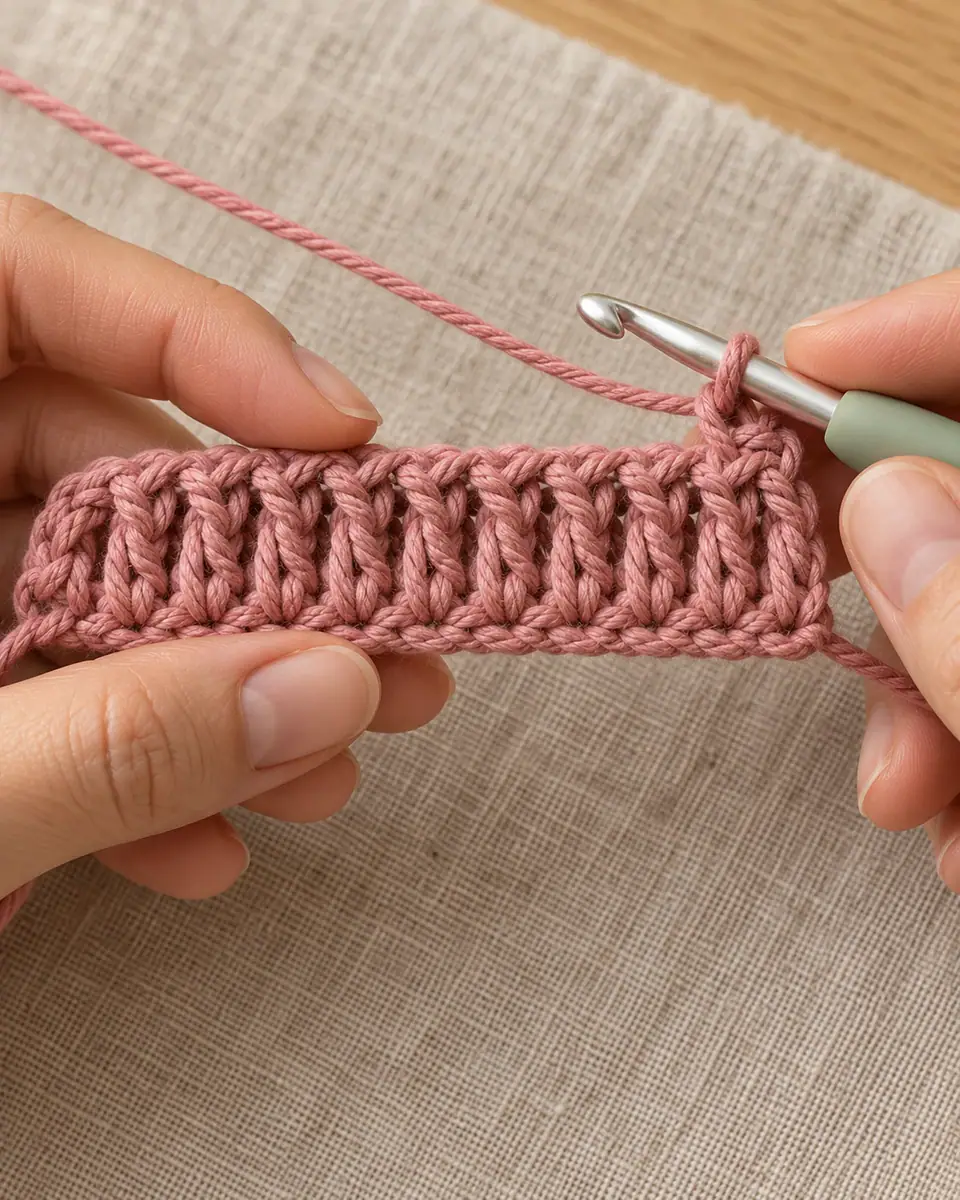
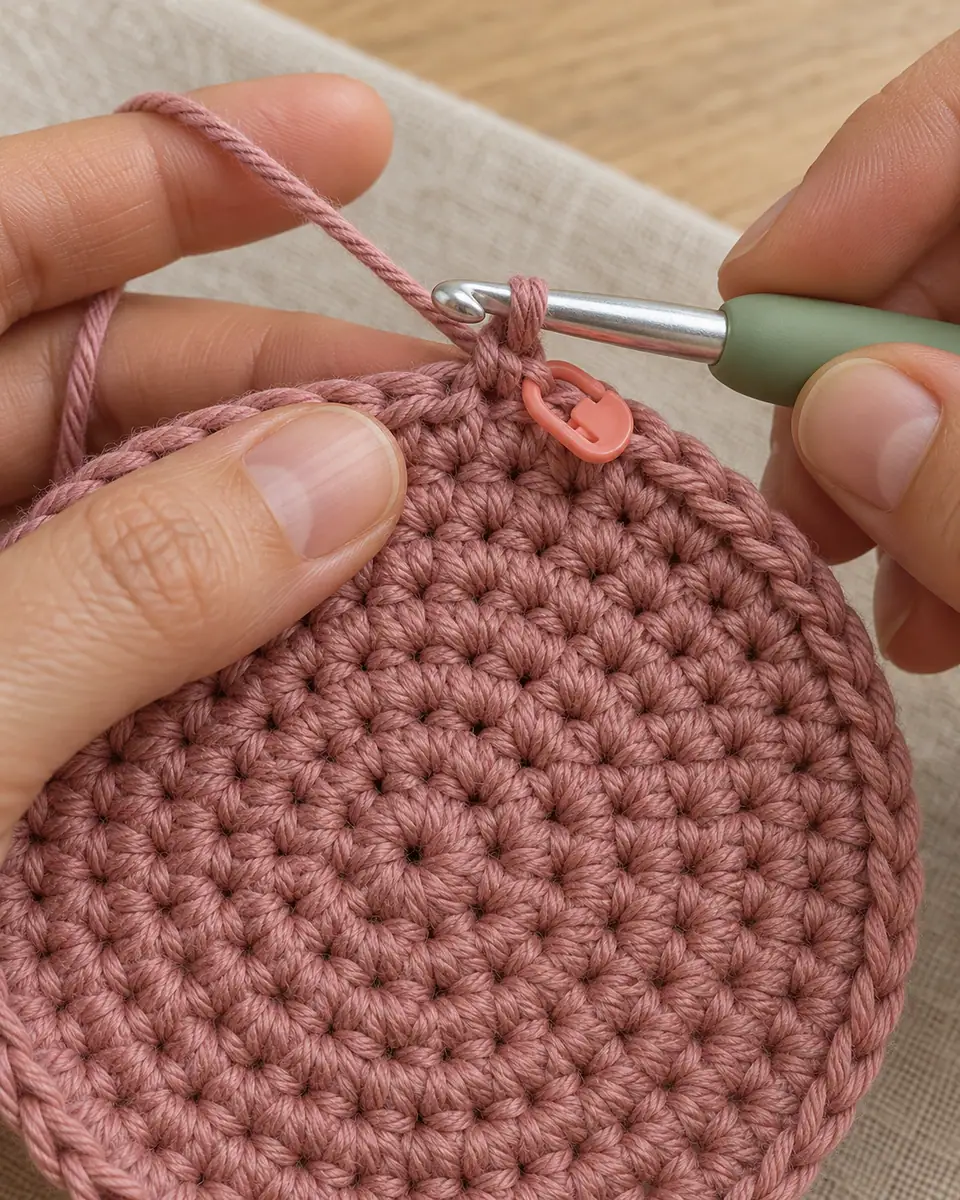
Count the tops of the stitches, the little sideways V shapes, never the posts. The loop on your hook is not a stitch and is never counted. Whether the turning chain counts as a stitch is written in the pattern notes: in most patterns a chain 3 at the start of a double crochet row counts as the first stitch, while the chain 1 before a single crochet row does not.
Stitch markers make counting faster. Clip one into the first stitch of the round, so you always know where the round began; in long rounds, put one every 10 or 20 stitches.
Check Gauge Before Size Matters
Gauge states how many stitches and rows fit inside a measured area, often 4 in (10 cm). The hook in the materials list is a starting point; your finished swatch shows whether the project will reach the planned dimensions.
The crochet gauge swatch guide explains how to make a sample larger than the measuring area, finish it, count in the center and choose a larger or smaller hook when the count does not match.
Use the Skill Level as a Preview
A skill label summarizes the techniques, not the time a project takes. The Craft Yarn Council describes Basic, Easy, Intermediate and Complex levels, while individual publishers may use different labels. The stitch list, shaping notes and finishing instructions show whether a pattern matches what you know.
Use a Stitch Chart as a Second View
A chart maps stitch placement with symbols. Start with its key, then locate the first row or center round and follow the arrows or numbers supplied by the designer. The complete crochet chart guide covers standard symbols, reading direction, repeats, motifs, filet grids and mosaic charts.
Common Mistakes When Reading Patterns
- Working in the wrong terms. A UK pattern worked with US stitches comes out taller and bigger. Check the terms first.
- Skipping the pattern notes. They tell you whether the turning chain counts and where each round starts.
- Losing the place in a repeat. Scan the whole line before starting it, and tick off each repeat on paper.
- Not counting. Count at the end of every line until the pattern is familiar.
- Ignoring gauge on a fitted piece. Ten minutes for a swatch can save a sweater.
Reading crochet patterns gets easier with every one you finish. If the basic stitches are still new, start with how to crochet and the single crochet lesson. For a first pattern with short, clear rounds, the crochet heart is a good choice, and the sunflower granny square is good practice for asterisk repeats and corners.
Frequently Asked Questions
How to read crochet instructions for beginners?
Scan the whole pattern once, then work one line at a time: the round or row number, the stitches in order, and the stitch count in parentheses at the end. Look up any abbreviation you do not know before you start.
What does the number in parentheses mean in a crochet pattern?
It is the stitch count: how many stitches you should have at the end of that round or row. Count before you start the next line.
How do I know if a pattern uses US or UK terms?
If the pattern uses sc, it is in US terms, because UK patterns have no single crochet. Most patterns also say which terms they use near the top.
What does “rep from *” mean in crochet?
Go back to the asterisk and work the instructions after it again, as many times as the pattern says. A double asterisk marks where to stop on the last repeat.
Does the turning chain count as a stitch?
It depends on the pattern, so check the notes. Usually a chain 3 before double crochet counts as the first stitch, and a chain 1 before single crochet does not.

Clara Parker
I’m Clara — a mom who is never without a hook, and the crochet half of the Recipes Dad family. I write cozy, practical patterns you can actually finish.
More about Clara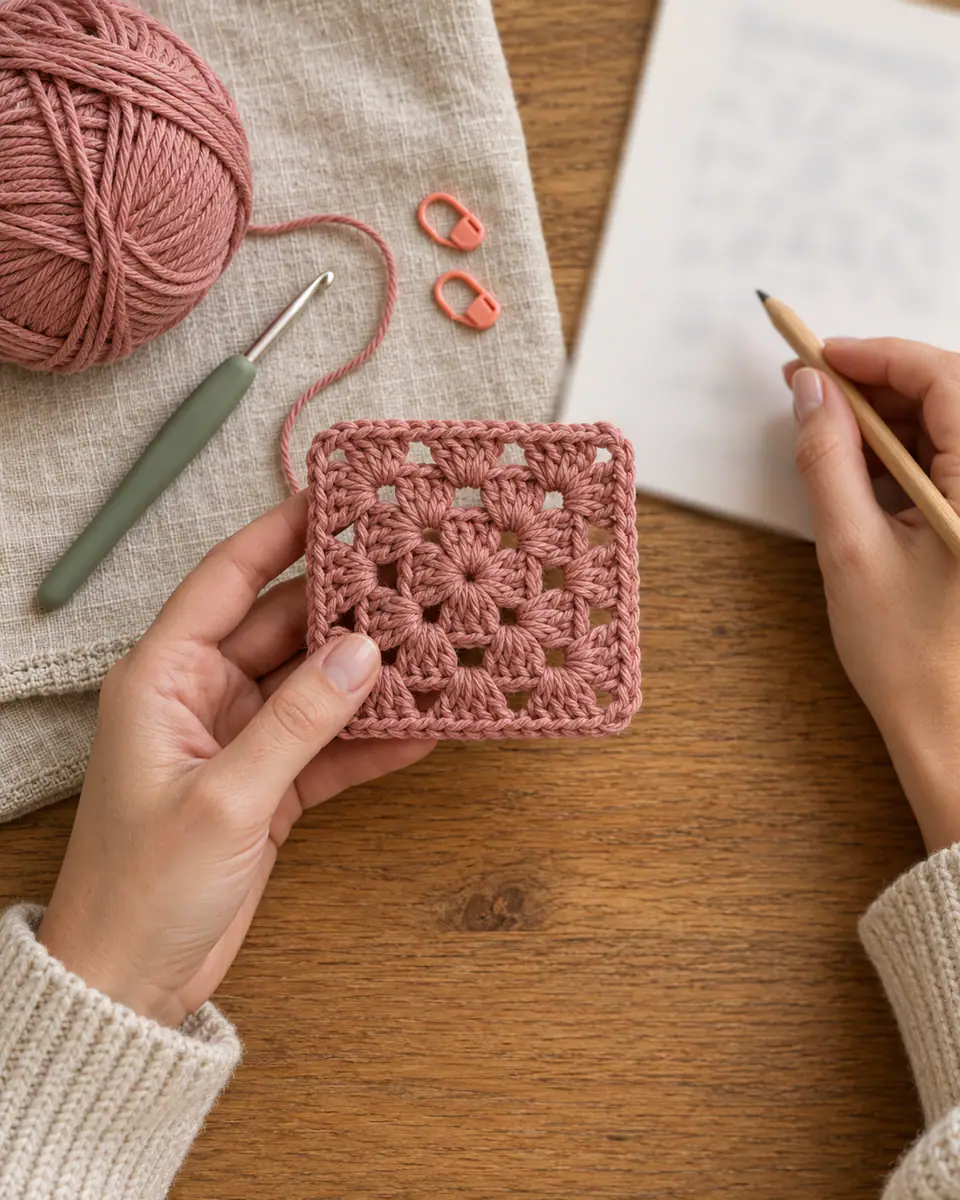
Maker notes
Made this pattern? Tell us about your yarn and colors, or ask a question about a row — Clara reads every note.