
A good crochet edging makes a project look finished. It straightens the sides, frames the colors and stops the edges from stretching. This lesson starts with the round of single crochet that every border begins with, shows how many stitches to work along the row ends and around the corners so the border lies flat, then teaches four edgings: single crochet, crab stitch, shell and picot.
What You Need
- Yarn of the same weight as the piece. A contrast color shows the edging off; the same color gives a quiet, tidy finish.
- A hook the same size as the piece, or half a size smaller if your borders tend to ruffle.
- Four locking stitch markers for the corners, and a yarn needle for the ends.
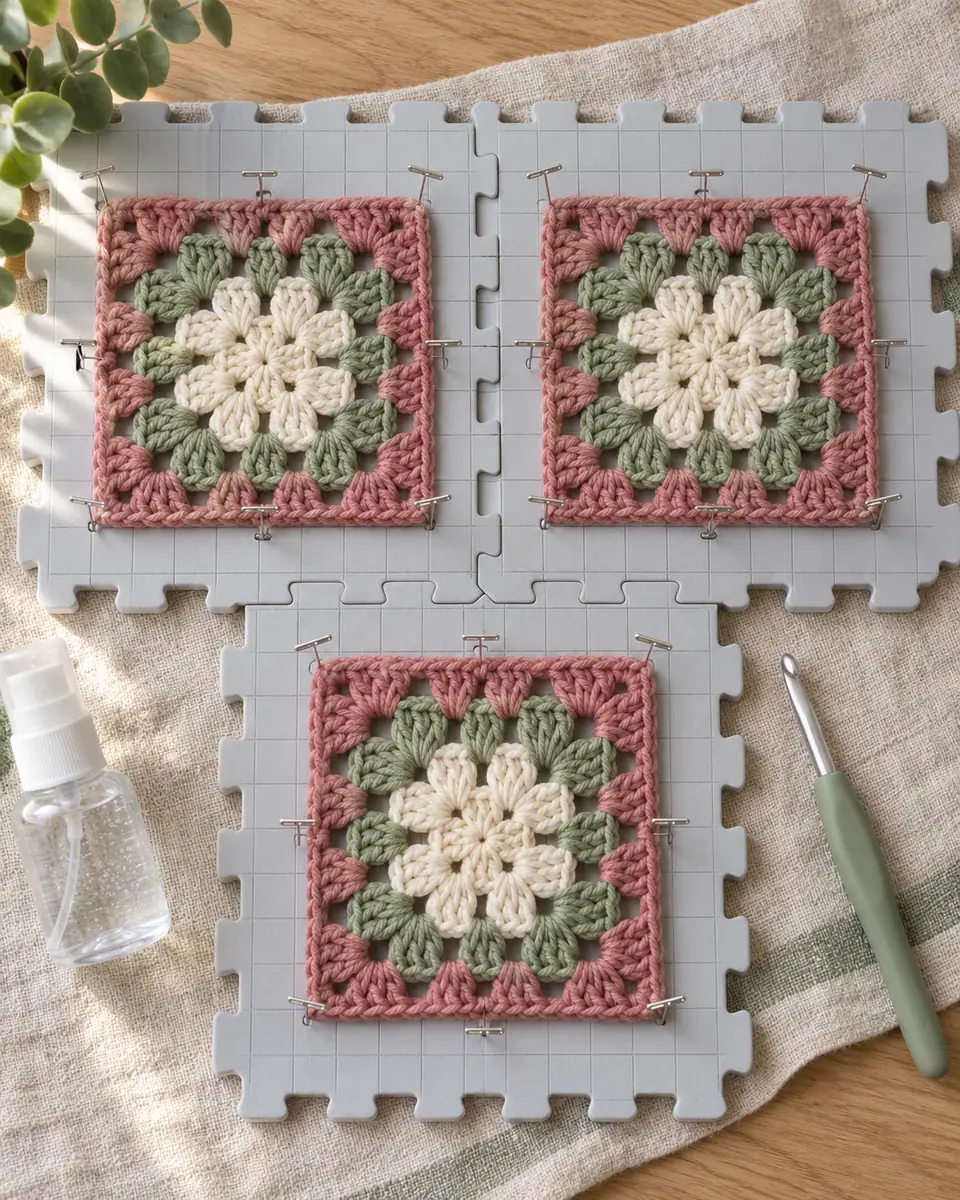
Weave in the ends of the piece and block it before you add the edging. The border follows the edge it is worked on, so a straight, square piece gets a straight, square border.
Start with a Round of Single Crochet
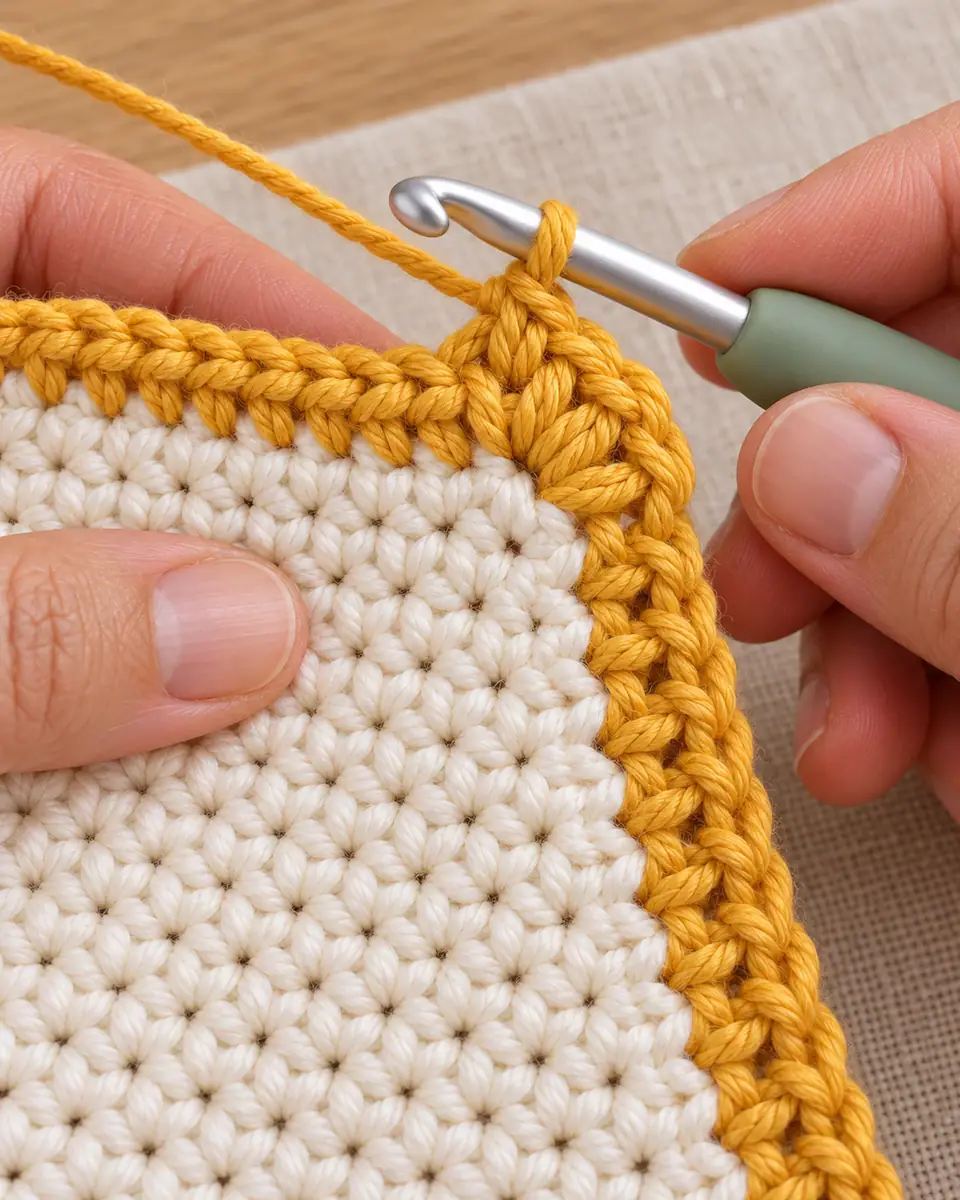
Almost every crochet edging starts with one round of single crochet all the way around. It evens out the side edges, which are always a little rough, and gives the fancier rounds a clean line of stitches to work into. On its own it is also the most simple crochet edging there is, and on a dishcloth or a plain blanket it is often all you need.
- Join the yarn in a stitch near a corner, with the right side facing you.
- Along the top edge, work 1 single crochet in each stitch.
- At each corner, work 3 single crochets in the corner stitch. The middle one of the three is the new corner stitch for the next round.
- Down the sides, work into the ends of the rows, spacing the stitches as in the table below.
- Along the bottom, work 1 single crochet in each chain of the foundation chain, going into the free loops on the other side of the chain.
- Join with a slip stitch to the first single crochet.
How Many Stitches Along the Row Ends
This is the part that decides whether a border lies flat. Rows of tall stitches need more single crochets on the side than rows of short ones, because each row end is longer.
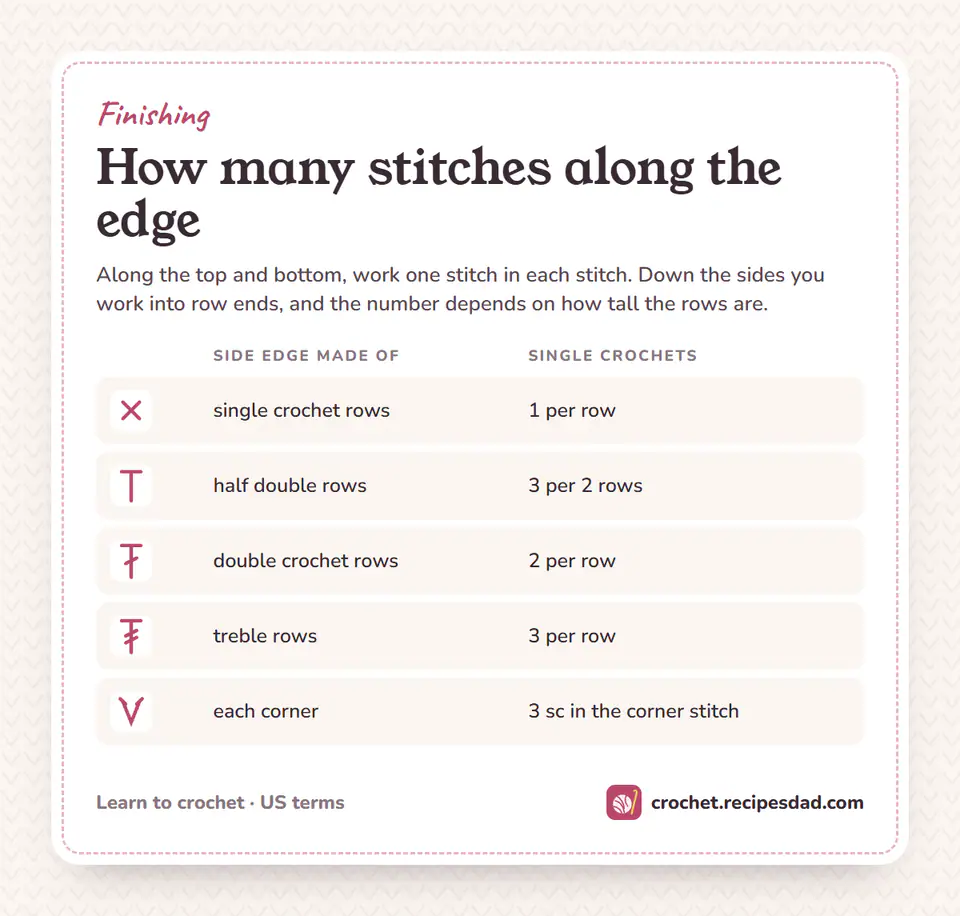
Treat the table as a starting point. Your tension changes things, so after the first 4 in (10 cm) of each side, lay the work flat and look. If the edge waves, you have too many stitches; take them out and space them wider. If the edge pulls in or the corners curl up, add a stitch every few rows.
Four Crochet Edging Stitches to Know
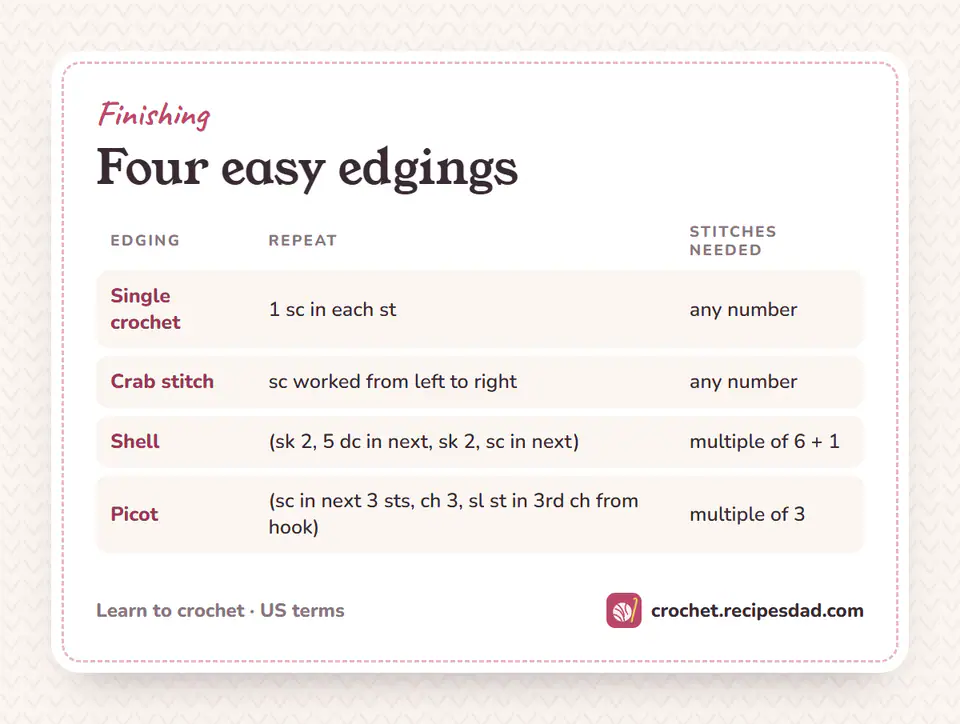
These four cover most finishes you will need. Each one needs a certain number of stitches on the round before it, so count first: the table below gives the repeat.
Crab Stitch (Reverse Single Crochet)
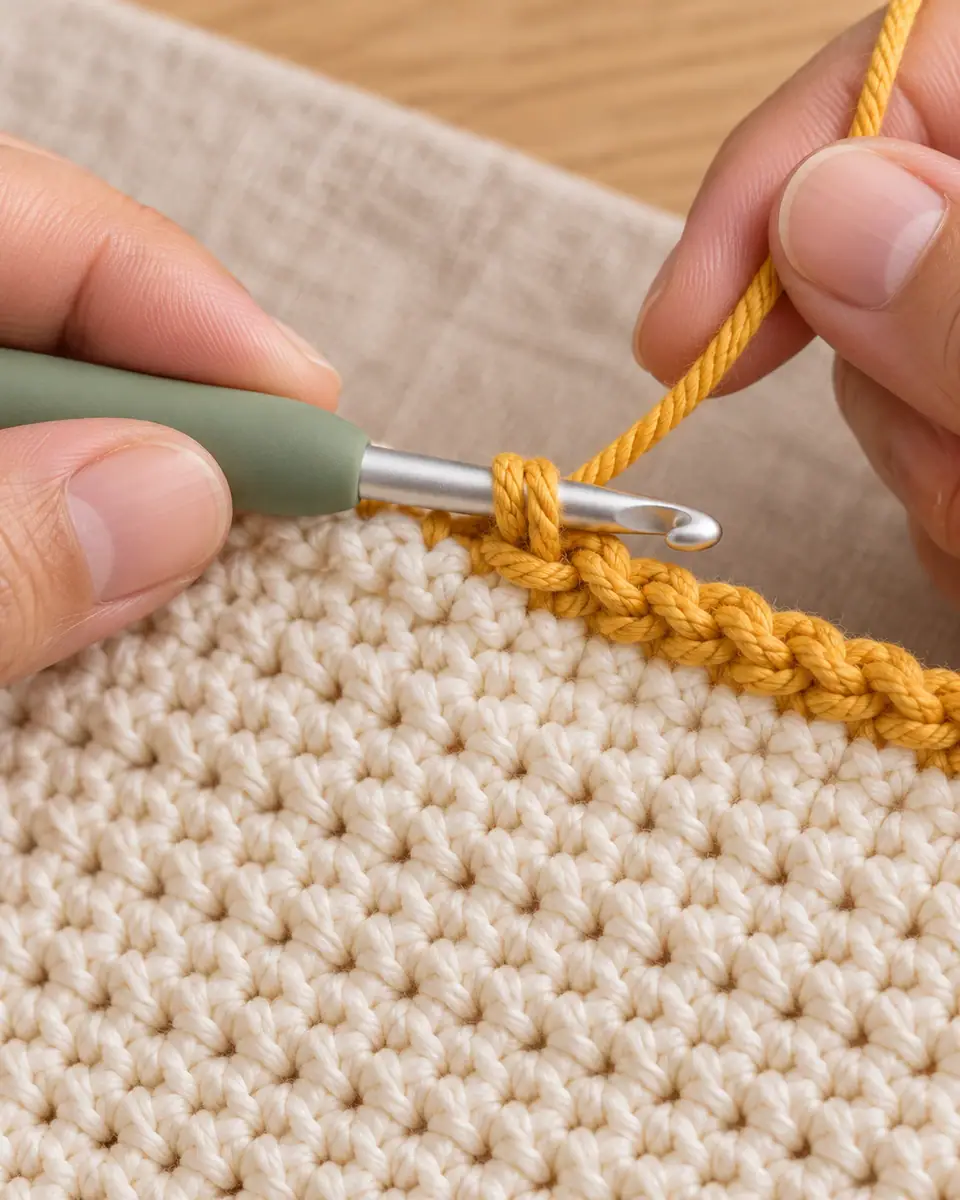
The crochet crab stitch edging is a single crochet worked backwards, from left to right if you are right-handed. It twists every stitch and gives a firm, corded edge that does not stretch out, very good on hats, bags and blankets that are used every day.
- Work a round of single crochet first. Do not turn.
- Ch 1. Insert the hook in the next stitch to the right, from front to back.
- Yarn over and pull up a loop. You have 2 loops on the hook.
- Yarn over and pull through both loops.
- Repeat in each stitch to the right. It feels awkward for the first few stitches, then it comes.
Shell Edging
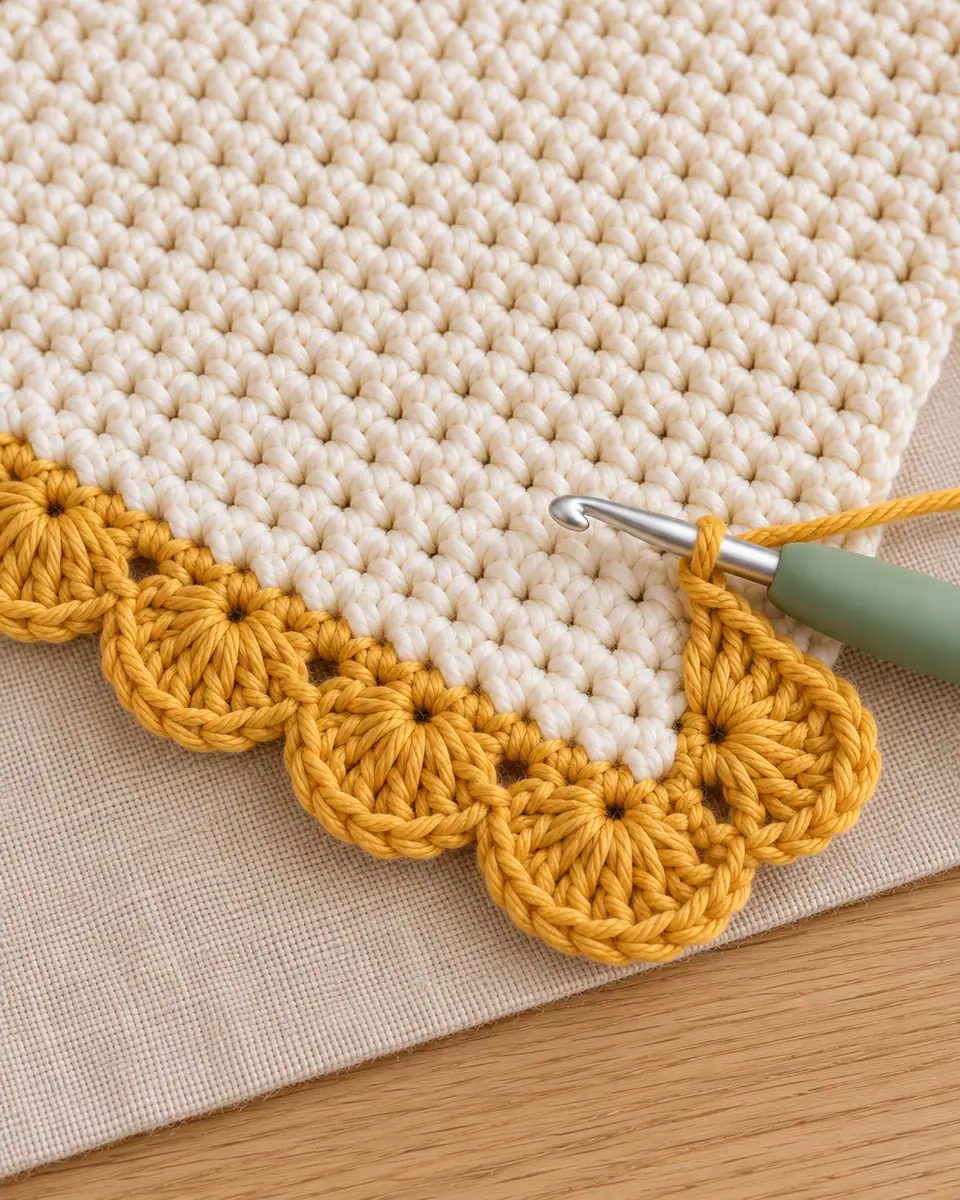
Crochet shell edging is the classic scalloped finish for baby blankets. Each shell is 5 double crochets in one stitch, anchored on both sides by a single crochet.
- On a round of single crochet, count the stitches along each side. For a straight edge you need a multiple of 6 plus 1.
- Sc in the first stitch. *Skip 2 stitches, work 5 double crochets in the next stitch, skip 2 stitches, sc in the next stitch.* Repeat from * to *.
- If the count does not fit, adjust it on the single crochet round: add or skip a stitch here and there along the side, never all at one end.
Picot Edging
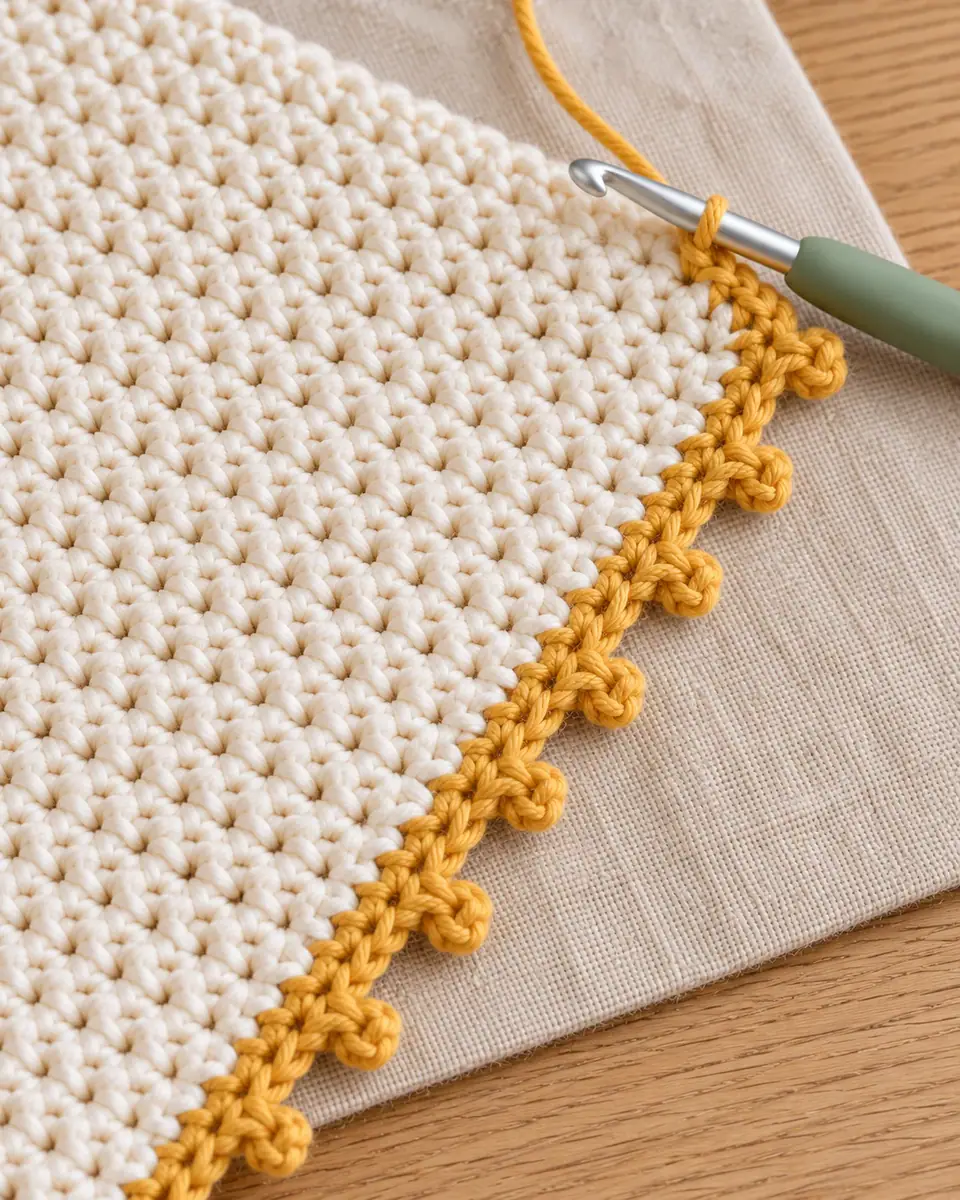
A crochet picot edge is a row of single crochets with a tiny loop of chains standing up every few stitches. It is delicate and very easy, and it suits baby things, collars and table linen.
- Work the picot round on a round of single crochet with a multiple of 3 stitches.
- *Sc in the next 3 stitches, ch 3, slip stitch in the 3rd chain from the hook.* Repeat from * to *.
- Keep the chains the same tension so all the picots stand the same height.
The tulip border placemat uses a close cousin of this edging: its last round is single crochet with a ch-2 picot at the top of each of the 20 blue shells.
Crochet Blanket Edging: Working Around the Corners
A crochet blanket edging is just a long border with four corners, so the corners are where it succeeds or fails. On every single crochet round, keep 3 single crochets in each corner stitch. On a shell round, put a shell (5 double crochets) in each corner stitch so the scallops turn the corner. If your count does not fit the repeat on a side, fix it on that side, not at the corner.
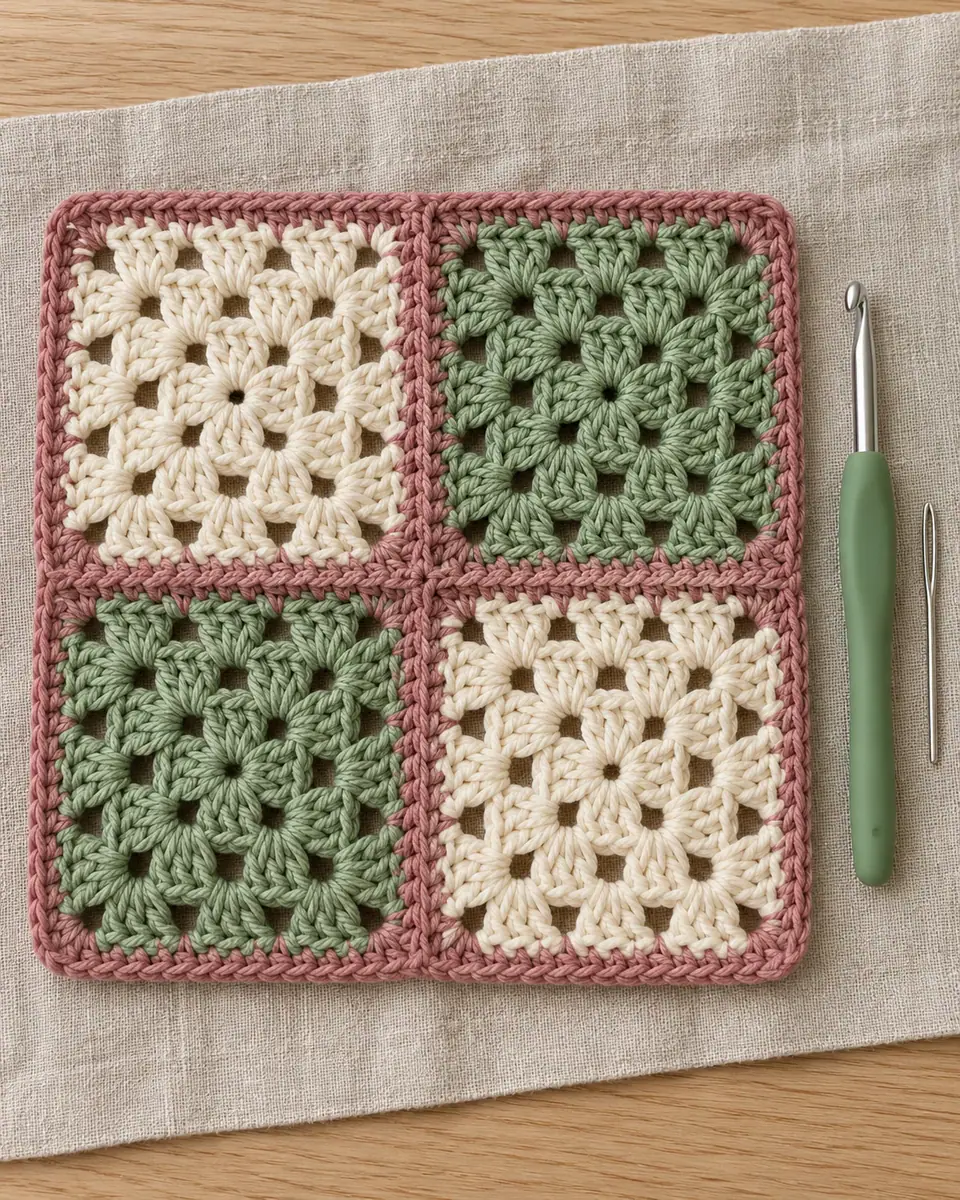
The same rule holds on a granny square. The sunflower granny square ends with a round of single crochet with (sc, ch 2, sc) in each corner space, 29 stitches on each side, which is both its crochet blanket border and the line you sew the squares together through.
Edging Shaped Pieces
Curves and points need small changes. On an outward curve, add a stitch now and then so the border does not pull. At a point, work a corner there. The crochet heart shows both: its contrast edging has one increase on each rounded top and a (sc, ch 2, sc) at the point, 30 single crochets in all.
Common Edging Problems and Fixes
- The border ruffles. Too many stitches, usually down the sides. Space them wider, or go down half a hook size.
- The border pulls and the piece cups. Too few stitches, or the tension is tight. Add stitches along the row ends, or go up half a hook size.
- Corners curl. Not enough stitches in the corner. Use 3 single crochets in each corner stitch on every round.
- The shells do not fit the side. The stitch count is not a multiple of 6 plus 1. Adjust the single crochet round first.
- A wavy edge after washing. Block the finished piece with the border pinned straight; see the blocking lesson.
To join pieces before the border goes on, see seaming crochet, and for the stitches themselves start with how to crochet. Every lesson is in Learn to Crochet.
Frequently Asked Questions
What is the easiest crochet edging?
One round of single crochet, with 3 single crochets in each corner. It is quick, it straightens the edges, and it is the base for every other edging.
How do you crochet lace edging?
Start with a round of single crochet, then add a stitch pattern with chains and taller stitches, such as shells or picots. Count the base round so it fits the repeat, and block the finished edge to open the lace.
How many single crochets go in a corner?
Work 3 single crochets in the corner stitch. On the next round, the middle stitch of those three is the corner, and it gets 3 single crochets again.
Why is my crochet border wavy?
There are too many stitches along the edge, usually on the sides, or the hook is too big. Take the border back, space the stitches wider and check after every 4 in (10 cm).
Should the edging be the same yarn as the blanket?
Use the same weight and fiber so the border washes and drapes like the blanket. The color can be different; a contrast color makes the edging stand out.

Clara Parker
I’m Clara — a mom who is never without a hook, and the crochet half of the Recipes Dad family. I write cozy, practical patterns you can actually finish.
More about Clara
Maker notes
Made this pattern? Tell us about your yarn and colors, or ask a question about a row — Clara reads every note.