
Every round toy, hat and coaster is shaped with two moves: the increase, two stitches in one, and the decrease. The single crochet decrease is the sc2tog crochet stitch, two stitches finished as one, and it is the first decrease most patterns ask for.
This lesson shows both moves with photos, then the invisible decrease that keeps amigurumi smooth, the taller dc2tog and hdc2tog, and the rule that keeps a circle flat instead of cupping or ruffling.
How Shaping Works in Crochet
Crochet fabric only changes width when the number of stitches changes. Add stitches and the piece widens, take them away and it narrows. Everything round, from a coaster to a toy's head, is a plan of where those changes go. There are only two moves to learn:
- Increase (inc): two stitches worked into one stitch of the row below. The count goes up by 1.
- Decrease (dec): two stitches of the row below closed into one new stitch. The count goes down by 1. In single crochet this is the sc2tog.
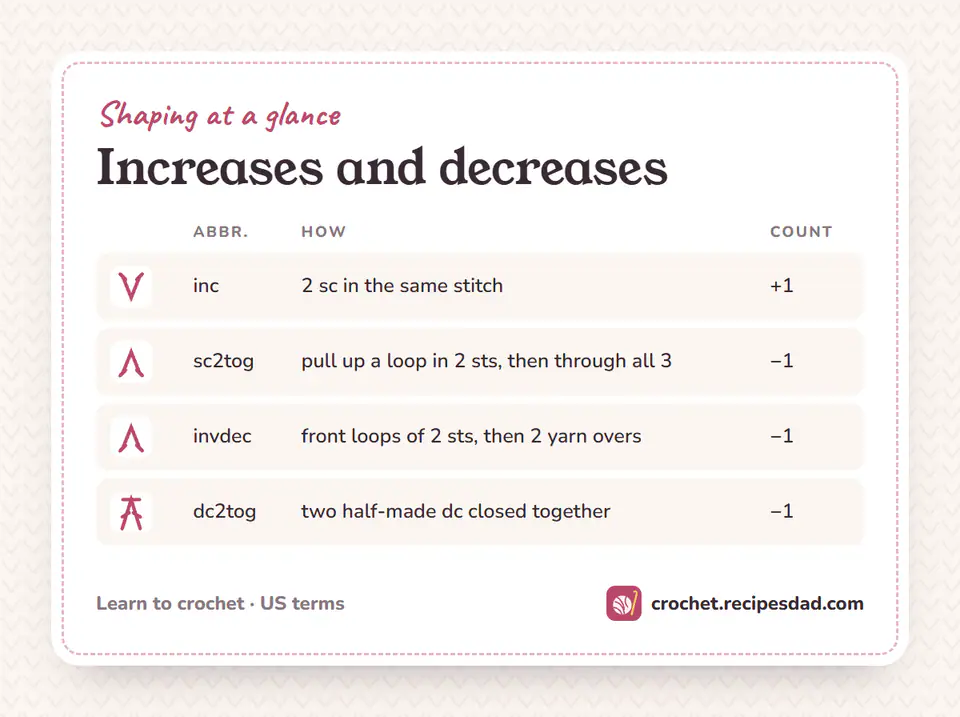
The terms are US. In UK patterns the same decrease is written dc2tog, because the UK “double crochet” is our single crochet; the US ⇄ UK stitch converter translates whole patterns.
What You Need
- Worsted weight (4) yarn in a light, smooth color and a matching hook, 4 to 5 mm.
- A stitch marker for the first stitch of the round. When you shape, counting is everything.
- A practice piece: a row of 20 single crochet, or a magic ring with 6 sc to try the circle below.
How to Increase
- Work a single crochet in the next stitch.
- Insert the hook into the same stitch and work a second single crochet. Two stitches now fan out of one, and the count has gone up by one.
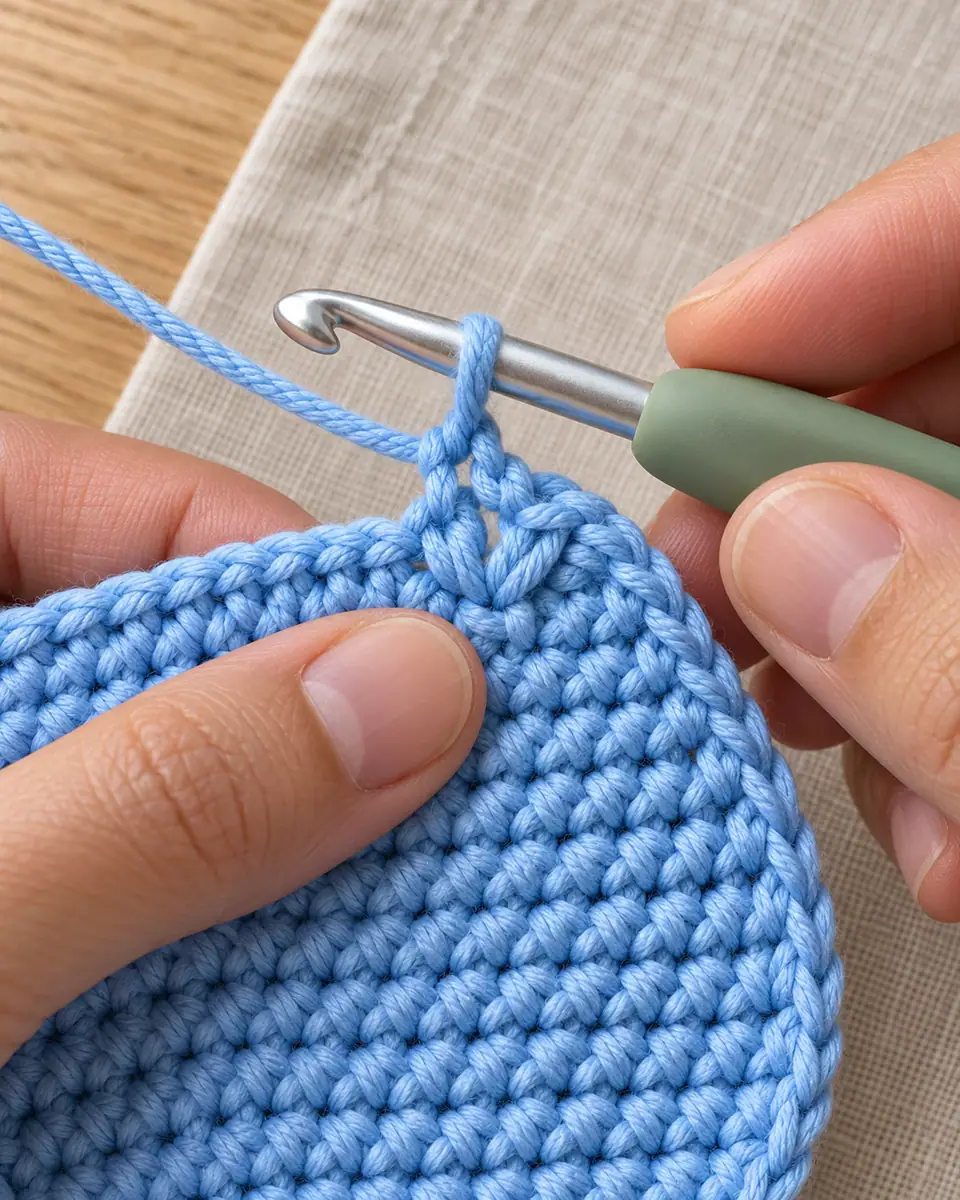
For taller stitches the idea is the same: “2 dc in next st” is a double crochet increase. Some patterns write “inc” and define it in the notes, so read them once before you start.
How to Crochet sc2tog, Step by Step
Single crochet two together starts two single crochets and finishes them as one. You need two stitches of the row below and you end with one.
- Insert the hook in the next stitch, yarn over and pull up a loop. Two loops are on the hook.
- Insert the hook in the stitch after it, yarn over and pull up a loop. Three loops are on the hook.
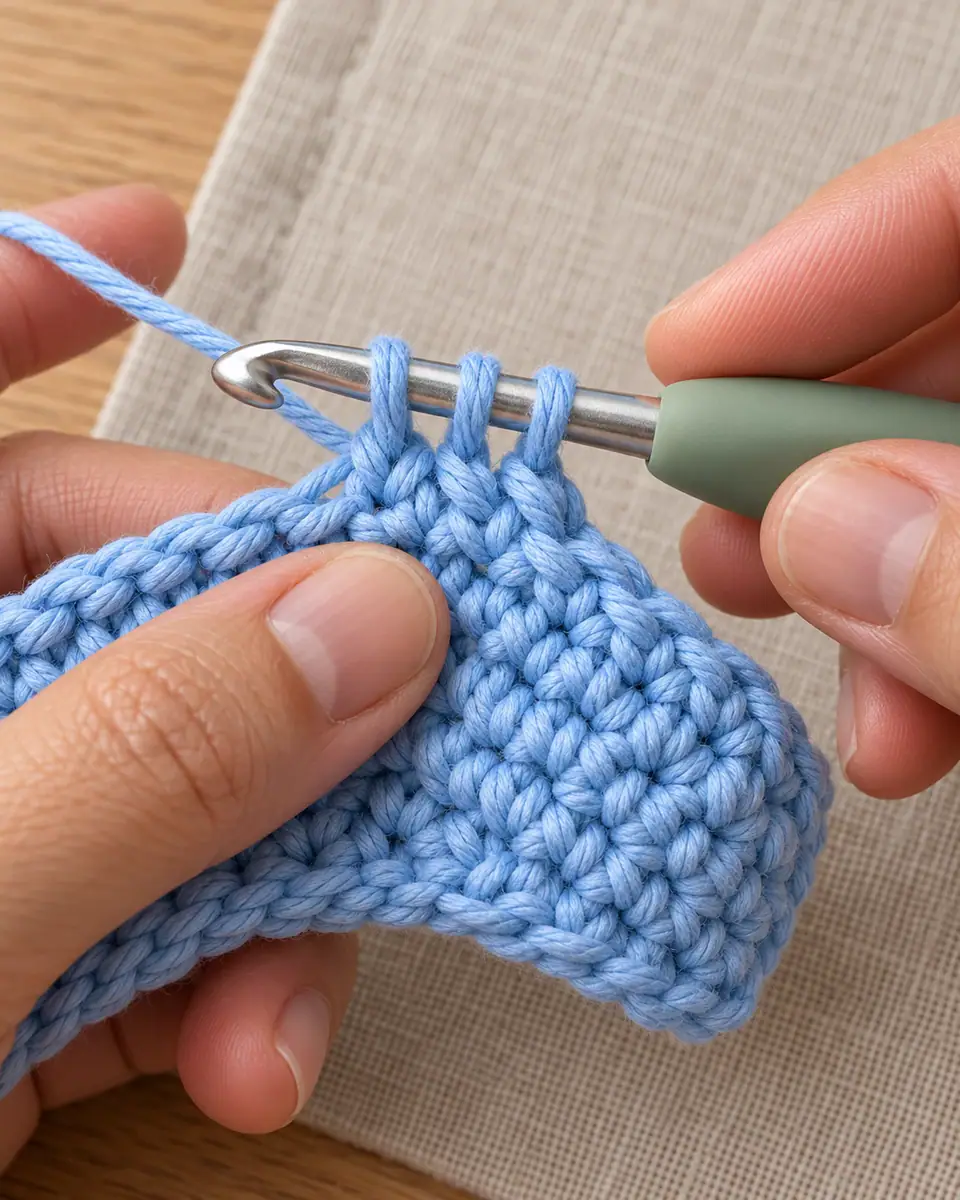
- Wrap the yarn and pull through all three loops at once. One loop is left, and the new stitch sits over two stitches of the row below like a small upside-down V.
The Invisible Decrease for Amigurumi
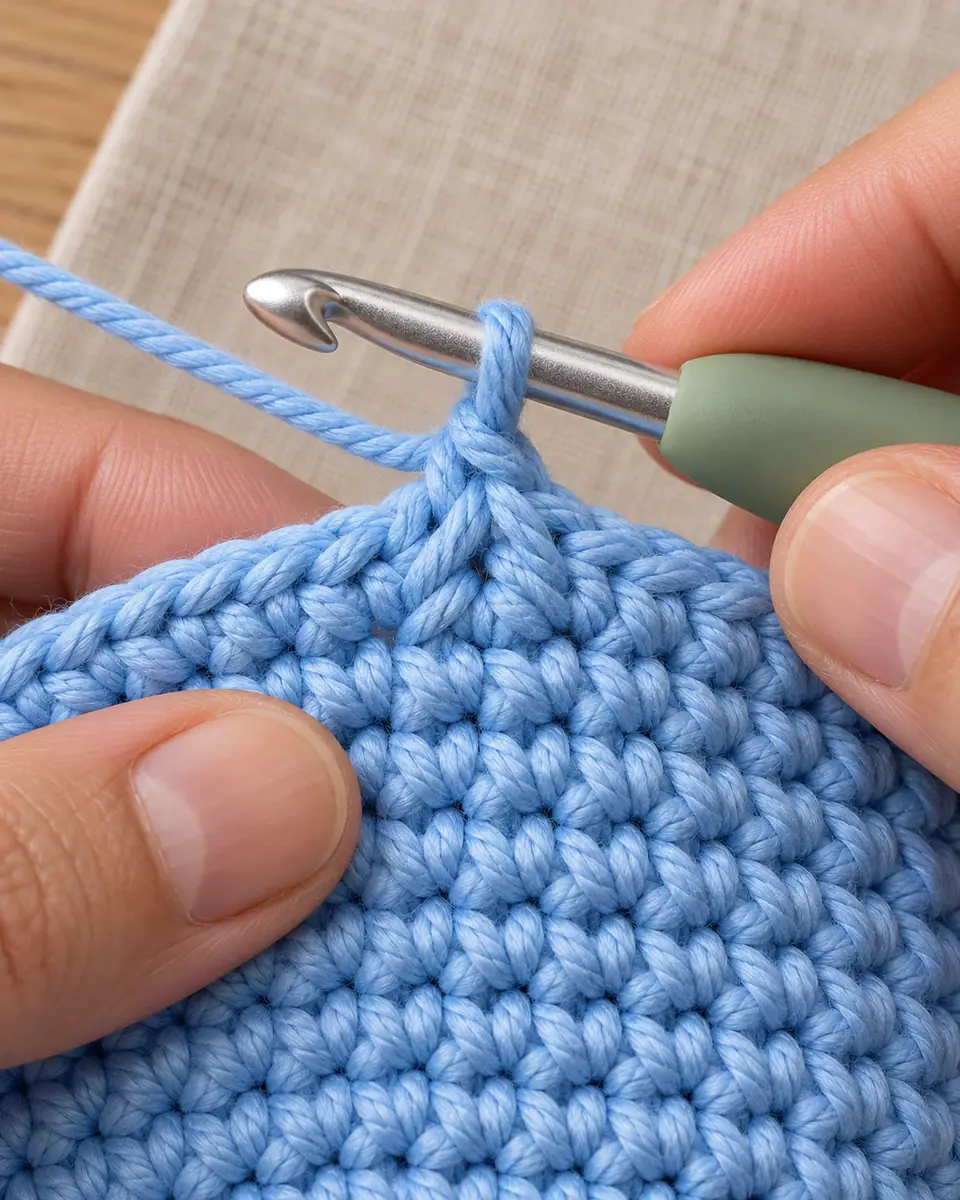
A standard sc2tog leaves a small bump or gap on a stuffed toy. The invisible decrease (invdec) hides it, which is why amigurumi patterns use it.
- Insert the hook through the front loop only of the next stitch, then through the front loop only of the stitch after it. Three loops are on the hook.
- Wrap the yarn and pull through the two front loops. Two loops remain.
- Wrap again and pull through both loops.
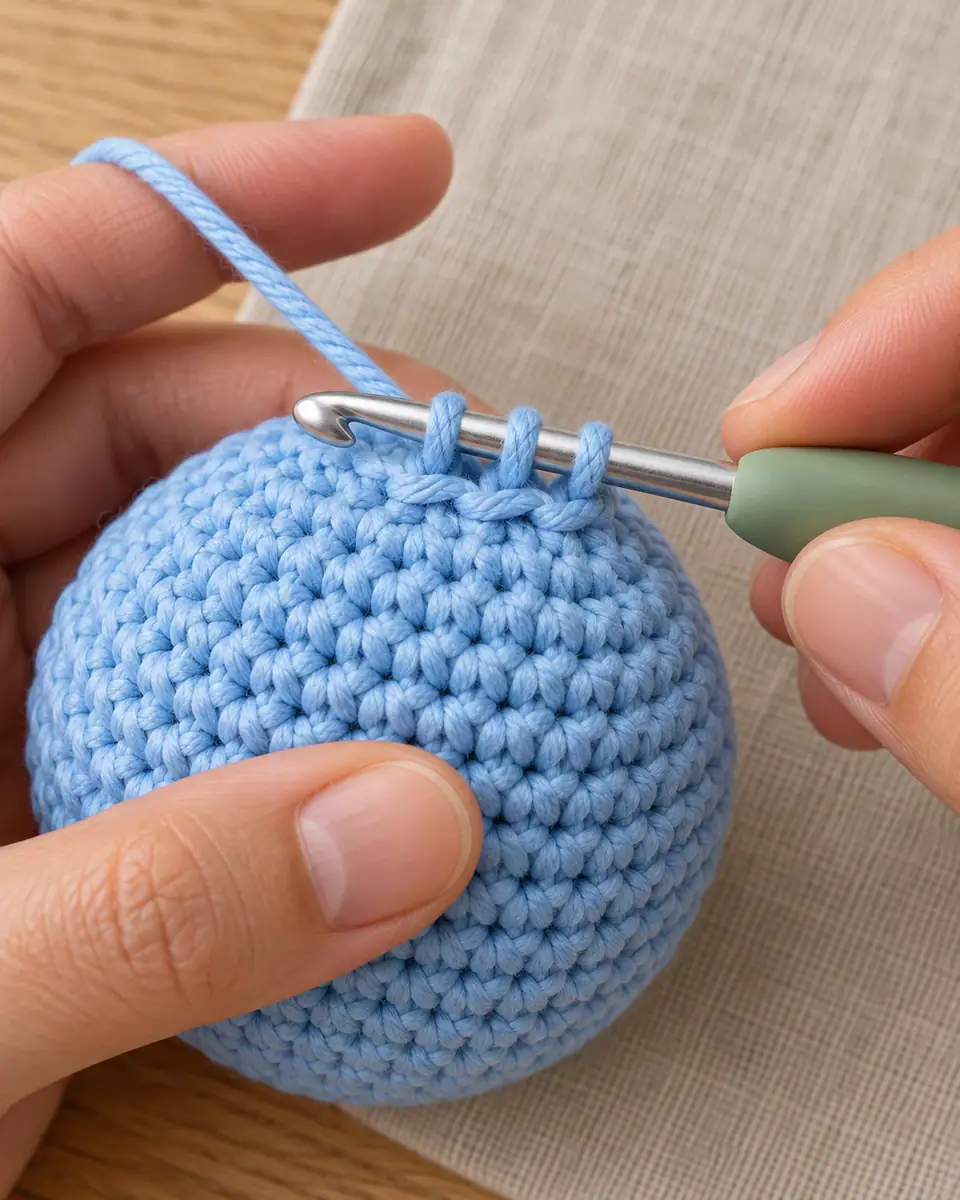
From the outside it looks like an ordinary single crochet, so the surface stays smooth. Our chubby bunny uses it to close the head from 48 stitches down to 18.
Beyond sc2tog: Crochet Decreases in Taller Stitches
Double crochet two together (dc2tog crochet). Yarn over, insert in the next stitch, pull up a loop, yarn over and pull through two loops (2 loops left). Repeat in the following stitch (3 loops left), then yarn over and pull through all three.
Half double crochet two together (hdc2tog crochet). Yarn over, insert, pull up a loop (3 loops), yarn over, insert in the next stitch, pull up a loop (5 loops), then yarn over and pull through all five. It is a bulky decrease; some designers prefer to work it with only one yarn over for a neater result, and say so in their notes.
The Six-Increase Rule for a Flat Circle
In single crochet a flat circle grows by 6 stitches every round: one more plain stitch between the increases each time. Fewer increases and the circle cups into a bowl; more and the edge ruffles. Taller stitches need more, so a double crochet circle adds 12 per round, as in our tulip border placemat.
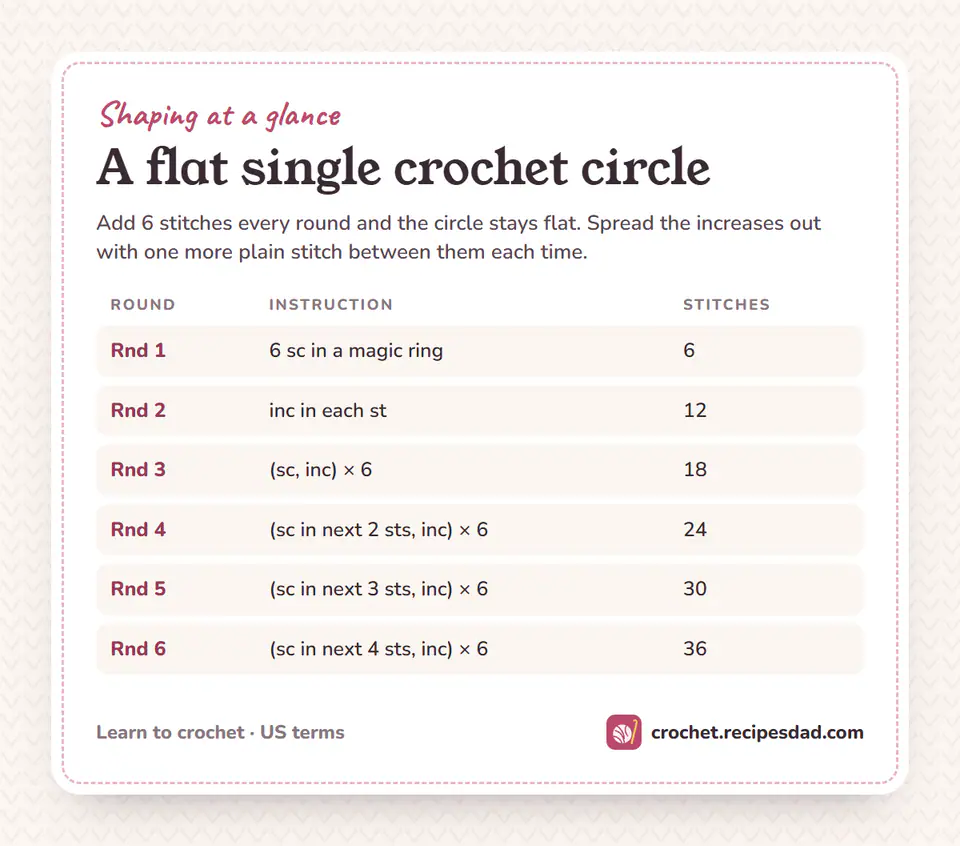
Stop increasing and keep working even rounds, and the flat circle turns up into walls. That is how the bunny's head becomes a bowl after Round 8, and how the crochet Christmas tree grows into a cone with a few increases spread over many rounds.
Common Mistakes and How to Fix Them
- The circle turns into a hexagon. If every increase sits right above the one in the round below, six corners appear. Move the increases around: in every other round, split the plain stitches, for example (sc in next st, inc, sc in next 2 sts) instead of (sc in next 3 sts, inc).
- Holes next to a decrease. The loops were pulled up too long. Keep them the height of a normal single crochet, or switch to the invisible decrease on stuffed pieces.
- The count drifts. In a spiral it is easy to work the first stitch twice or skip the last one. Move the marker up every round and count at the end of every shaping round.
- Decreases in the wrong place. Patterns often say “(sc in next 4 sts, sc2tog) 6 times”. Mark each repeat with a removable marker the first time; you will see at once if a group is off.
Next steps: the stitches themselves are in single crochet and double crochet, and How to Read Crochet Patterns explains brackets and repeats like the ones above. Everything else is in Learn to Crochet.
Frequently Asked Questions
How do you crochet sc2tog?
Pull up a loop in the next stitch, pull up a loop in the stitch after it (three loops on the hook), then yarn over and pull through all three. Two stitches become one.
What does single crochet two together mean?
It means two single crochets that are started separately and finished together, so they form one stitch. It is the basic single crochet decrease and lowers the stitch count by one.
Is sc2tog the same as an invisible decrease?
No. Both remove one stitch, but sc2tog goes under both loops and leaves a small bump, while the invisible decrease uses the front loops only and looks like a normal single crochet.
How many stitches do you increase in a round to keep it flat?
In single crochet, 6 per round; in half double crochet, usually 8; in double crochet, 12. Space them evenly and stagger them so the circle stays round.
What is sc2tog in UK terms?
UK patterns call it dc2tog, double crochet two together, because the UK double crochet is the US single crochet. The way you work it is exactly the same.

Clara Parker
I’m Clara — a mom who is never without a hook, and the crochet half of the Recipes Dad family. I write cozy, practical patterns you can actually finish.
More about Clara
Maker notes
Made this pattern? Tell us about your yarn and colors, or ask a question about a row — Clara reads every note.