
Learning how to chain stitch crochet is the very first step of almost every project. The chain is the base for flat pieces, the turning chain at the start of each row and the spaces in lace and granny squares. It takes a minute to learn and a little longer to make even.
This lesson starts with the slip knot, then shows the chain step by step, how to count it, which part of the chain to work into, and finally the slip stitch, the small stitch that joins rounds and moves you along the work.
What You Need
- Worsted weight (4) yarn in a smooth, light color. The photos use mustard yellow cotton so every chain is easy to see.
- A 5 mm (US H-8) crochet hook, or the size on your yarn label. The hook size chart converts letters to millimeters.
- Scissors and, for long chains, a stitch marker or two.
If you have not chosen a hook and yarn yet, or want to see the two ways of holding the hook, start with how to crochet and come back here.
How to Make a Slip Knot
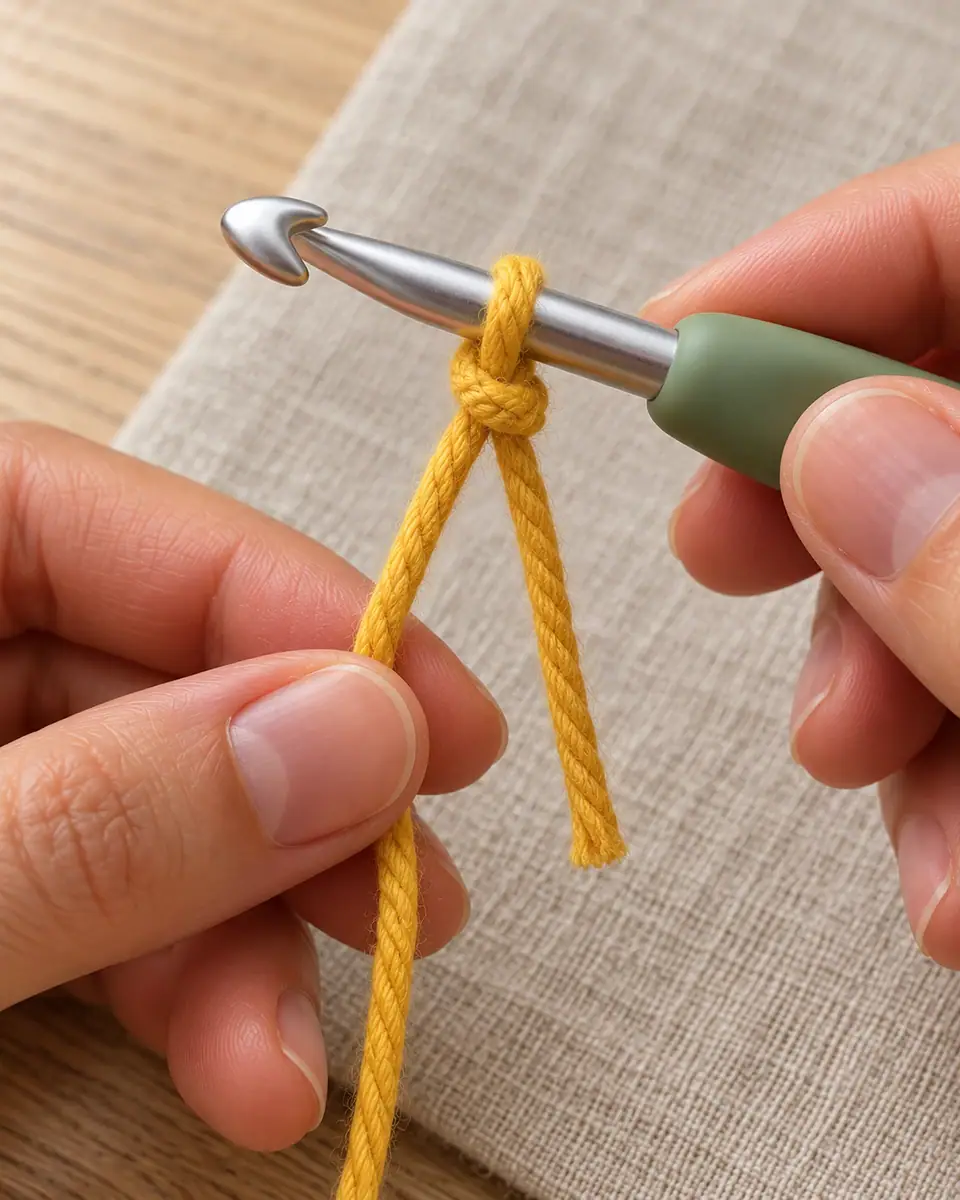
Every piece of crochet starts with a slip knot: an adjustable loop that sits on the hook and becomes the first loop of your work. It is not a stitch and is never counted.
- Leave a tail of about 6 in (15 cm). Make a loop with the yarn so the working yarn (the end going to the ball) lies under the tail.
- Reach through the loop with the hook or your fingers and catch the working yarn.
- Pull the working yarn up through the loop to make a new loop, and put it on the hook.
- Pull the working yarn, not the tail, until the loop sits snugly around the hook. It should slide along the shaft without being loose.
If pulling the working yarn tightens the loop, the knot is right. If it is the tail that tightens it, the knot was tied the other way round; it still works, but the loop cannot be adjusted later, so tie it again.
How to Chain Stitch Crochet, Step by Step
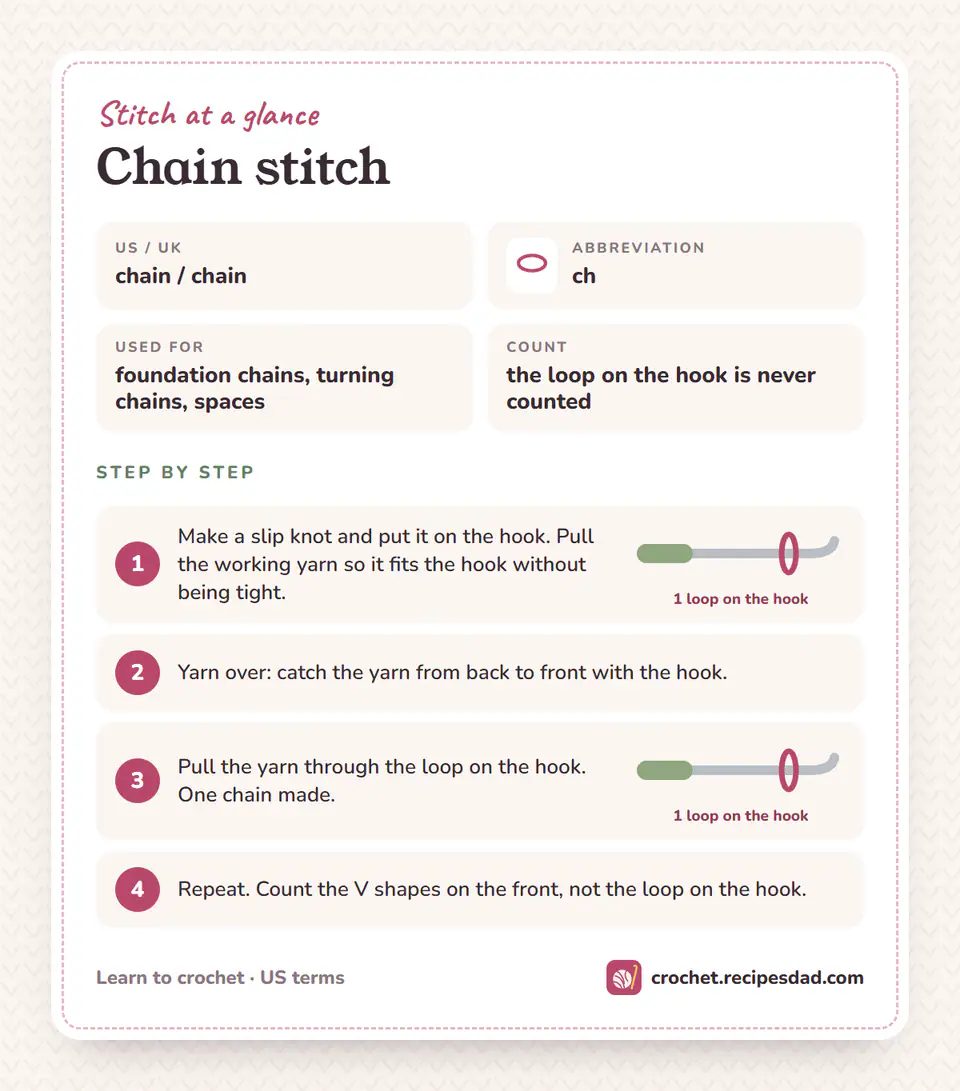
With the slip knot on the hook, hold the base of the knot between the thumb and middle finger of your other hand, and keep the working yarn over your index finger.
- Yarn over. Turn the hook so the throat faces you and catch the yarn from back to front, so it wraps over the hook.
- Pull through. Turn the throat down a little and draw the yarn through the loop on the hook. One chain is made, and there is again one loop on the hook.
- Move your fingers up. Every two or three chains, move the thumb and middle finger up to pinch the chain just under the hook. Holding it close keeps the chains even.
- Repeat until you have the number of chains the pattern asks for.
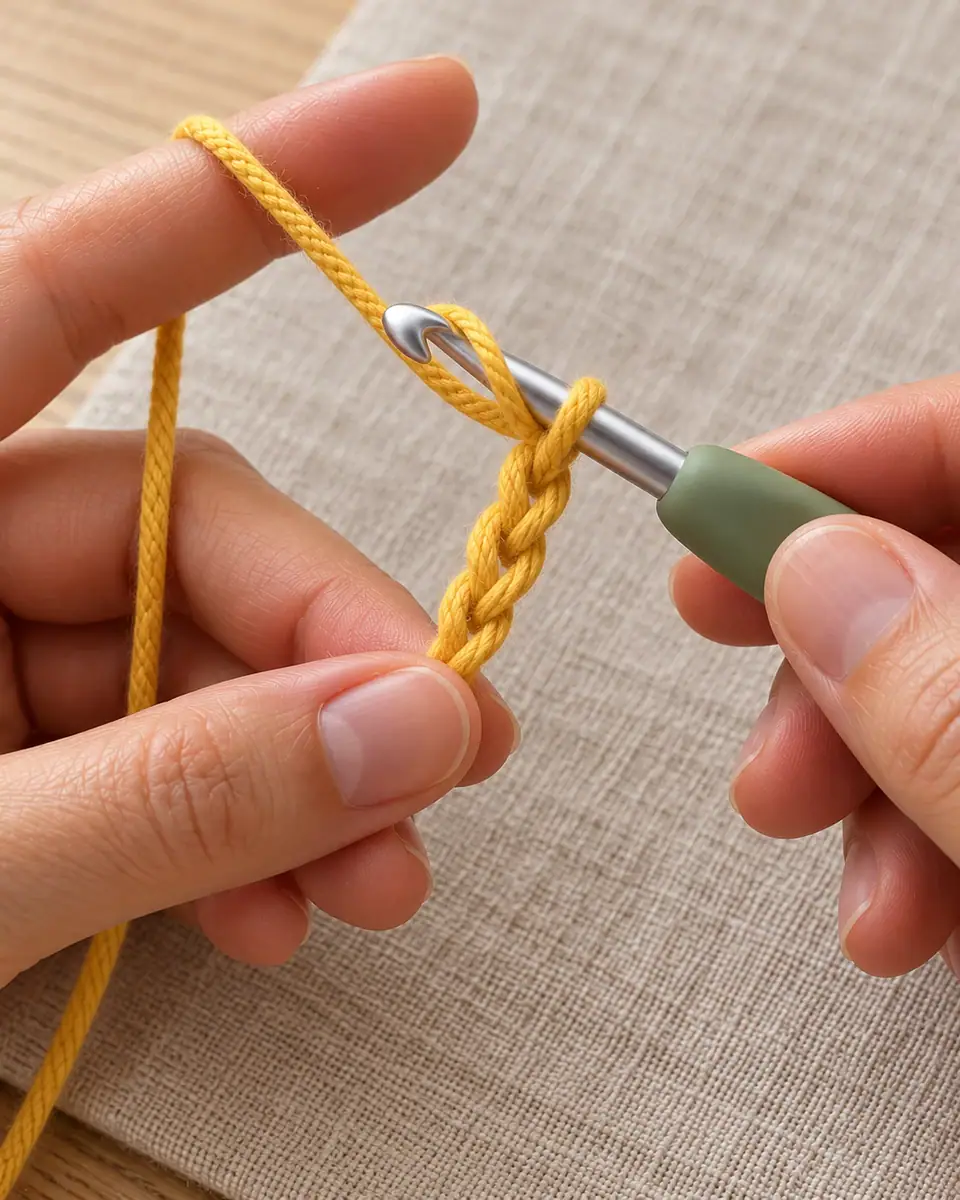
That is all there is to how to chain stitch crochet: yarn over, pull through, again and again. A single chain on its own is sometimes called a crochet single chain stitch, to tell it apart from decorative double chains, but in patterns it is simply “ch”.
How to Count Chains
Look at the front of the chain: each chain is a small sideways V, one inside the next. Count the Vs. Do not count the loop on the hook, and do not count the slip knot at the start.
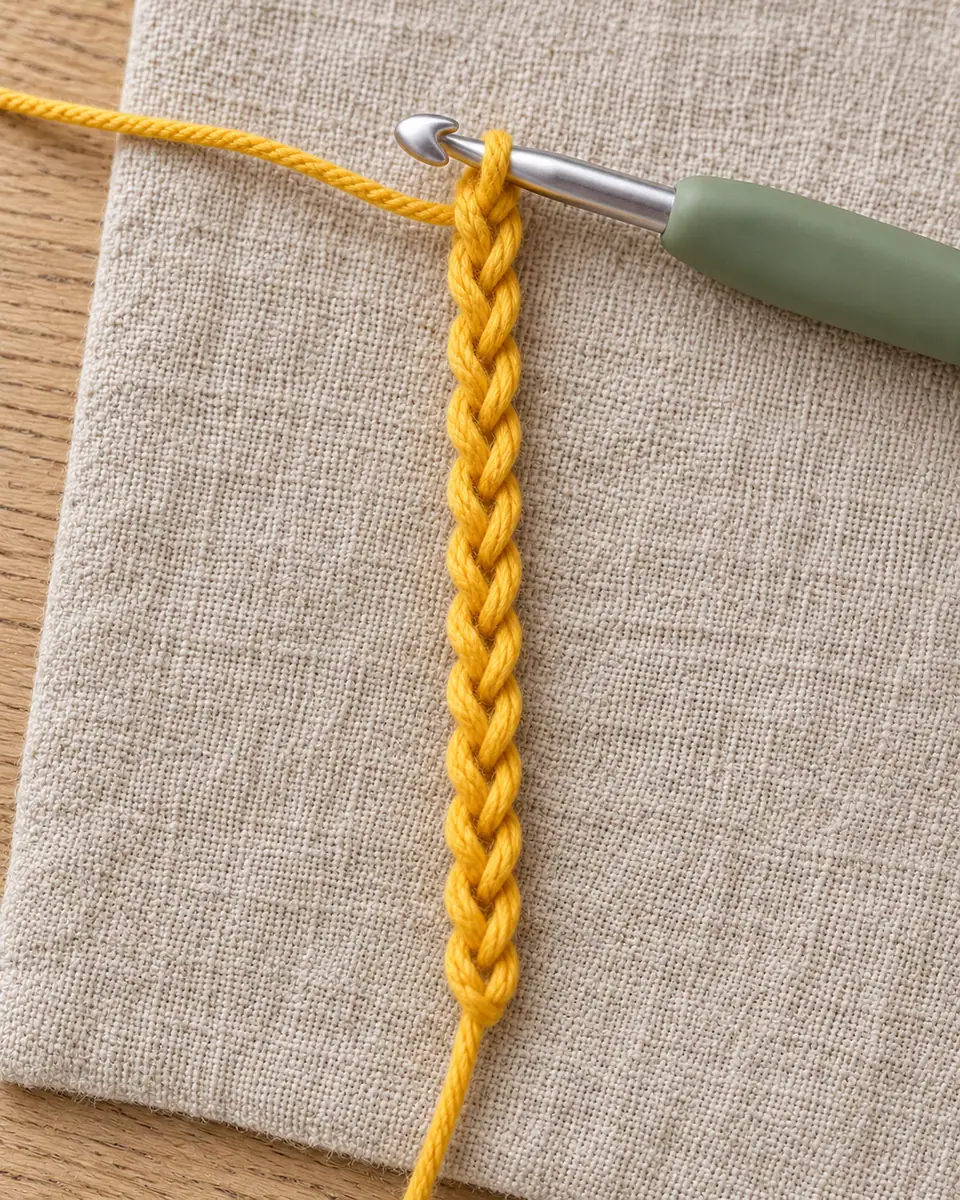
For long chains, put a stitch marker in every 10th or 20th chain as you go, so you only ever recount the last few. Patterns often ask for one or two more chains than the stitches you need: the extra chains stand in for the height of the first stitch. For a foundation chain, single crochet goes into the second chain from the hook, half double into the third and double crochet into the fourth.
Where to Work Into the Chain
Turn the chain over and you will see a line of small bumps running down the back. These back bumps (also called back bars) give you three ways to work the first row:
- Under the top loop only. The quickest and the easiest to see, but it leaves a slightly loose, loopy bottom edge.
- Under the top loop and the back bump. Very firm and stable. Good for bags and anything that must not stretch.
- Into the back bump only. The front of the chain stays untouched and forms a neat row of Vs along the bottom edge that matches the top edge. It is the tidiest finish for blankets and scarves, and worth learning once the chain feels easy.
Use the same method for the whole row. Mixing them makes the bottom edge uneven.
How to Slip Stitch
The slip stitch (sl st) is the shortest crochet stitch. It adds almost no height, so patterns use it to join a round to its first stitch, to move the hook to a new place without adding a row, to join a chain into a ring and to make firm seams.
- Insert the hook into the stitch the pattern names, under both top loops unless it says otherwise.
- Yarn over and pull the yarn through the stitch and through the loop on the hook, all in one movement. One loop stays on the hook.
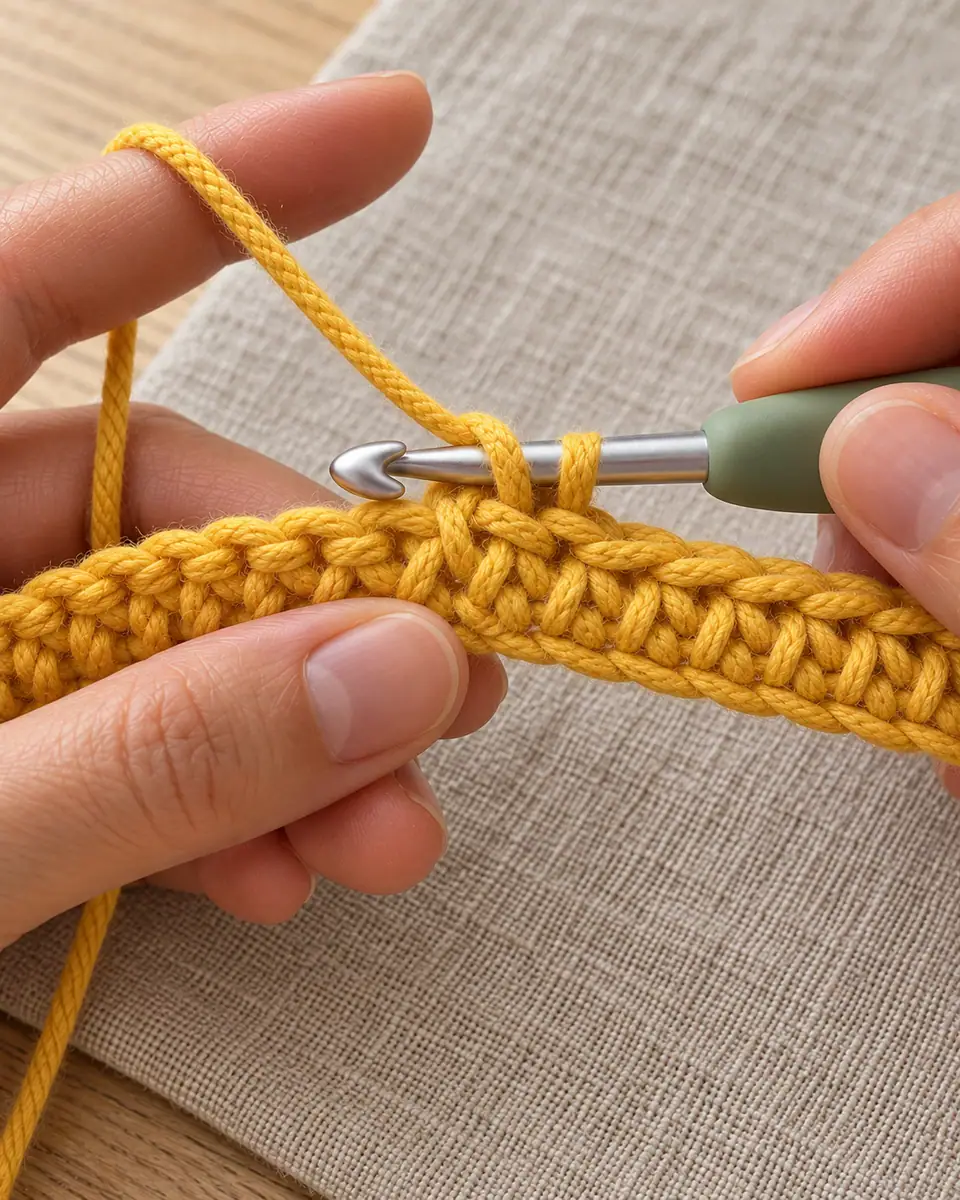
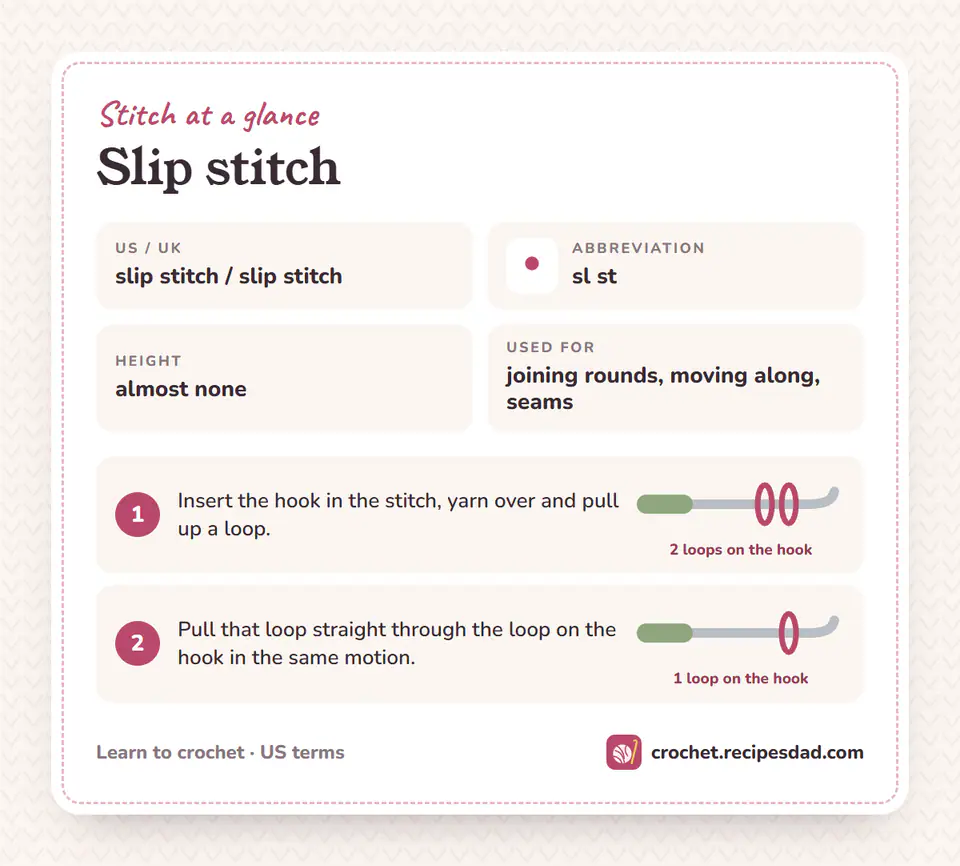
Keep slip stitches loose. Because the yarn is pulled through two things at once, they tighten very easily, and a tight slip stitch join is hard to work into on the next round. In UK patterns the name is the same, sometimes written “ss”.
Common Mistakes and How to Fix Them
- The chain is too tight to work into. This is the most common problem of all. Make the chain with a hook one or two sizes larger, then switch to the pattern hook for the first row.
- Chains of different sizes. Your fingers are too far from the hook. Move the pinch up every few chains.
- The chain twisted when joining it into a ring. Lay it flat with all the Vs facing the same way before you slip stitch the ends together.
- The bottom edge pulls in. The chain is tighter than the rows above it. Use a bigger hook for the chain, or work into the back bumps for a firmer edge with the same stretch.
- Not enough chains at the end of the first row. Count again, then add or pull out chains from the slip knot end: it is easier than taking out the whole row.
Practice With a Real Pattern
A long foundation chain is the first step of our crochet tote bag, which starts with 48 chains worked on both sides to make an oval base. The crochet heart garland is strung on a single chain, and each round of the tulip border placemat is joined with a slip stitch.
Once chains and slip stitches feel easy, move on to single crochet, the first stitch worked into the chain, and then to half double and double crochet. When you want to start in the round without a chain ring, the magic ring lesson shows how. All the lessons are in Learn to Crochet.
Frequently Asked Questions
How to do chain stitch crochet for beginners?
Make a slip knot on the hook, wrap the yarn over the hook from back to front and pull it through the loop. Repeat, keeping the chains on the wide part of the hook so they stay the same size.
How to slip stitch crochet?
Insert the hook in the stitch, yarn over and pull the yarn through the stitch and the loop on the hook in one movement. It is used to join rounds and to move along the work without adding height.
Does the slip knot count as a chain?
No. The slip knot is only the first loop on the hook. Count the Vs on the front of the chain, never the slip knot and never the loop on the hook.
Why is my foundation chain so tight?
Most people chain more tightly than they crochet. Use a hook one or two sizes larger for the chain only, and keep each chain on the wide shaft of the hook.
What is the back bump of a chain?
It is the small bar on the back of each chain. Working the first row into the back bumps leaves a neat row of Vs along the bottom edge.

Clara Parker
I’m Clara — a mom who is never without a hook, and the crochet half of the Recipes Dad family. I write cozy, practical patterns you can actually finish.
More about Clara
Maker notes
Made this pattern? Tell us about your yarn and colors, or ask a question about a row — Clara reads every note.