
The single crochet is the shortest of the basic stitches and the one most crochet starts with. It makes a firm, dense fabric, it is the stitch of almost every amigurumi, and once your hands know it, every taller stitch is the same idea with a few more yarn overs.
This lesson takes it one move at a time, with a photo of the loops on the hook at each step. You will also learn where the first stitch of a row goes, why the chain 1 does not count, how to keep the edges straight, and what the stitch is called in UK patterns.
What You Need to Practice
- Worsted weight (4) cotton or acrylic yarn in a smooth, light solid color. Dark, fuzzy or variegated yarn hides the loops you need to see. The yarn weight guide explains the numbers on the label.
- A 5 mm (US H-8) crochet hook, or the size your yarn label suggests. If your hook only shows a letter, check the hook size chart.
- Scissors and a yarn needle for the ends, plus a stitch marker if you work in rounds.
Start with a foundation chain of 15 or so. If chains are new to you, the chain stitch lesson shows the slip knot and how to count them.
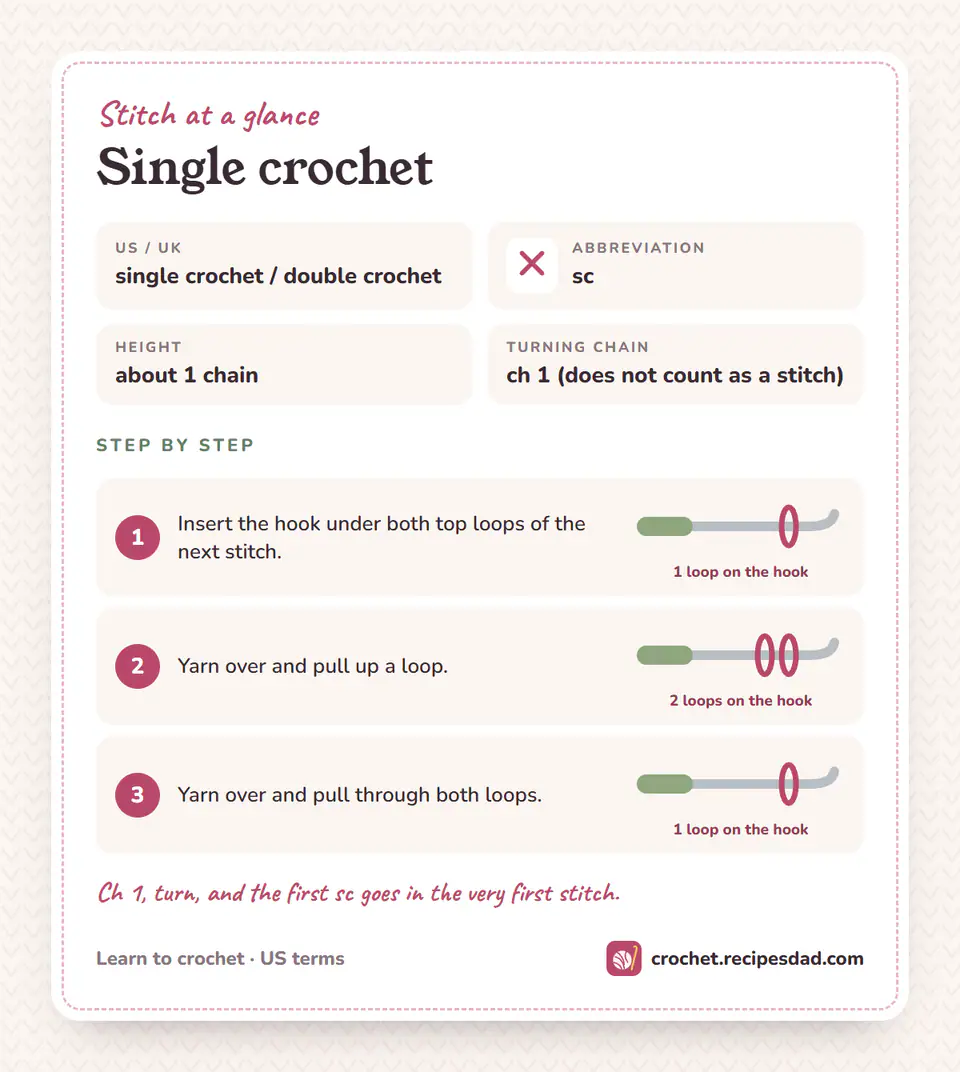
How to Single Crochet, Step by Step
Every stitch is the same three moves: insert, pull up a loop, pull through two. Say it out loud the first few rows; it helps your hands find the rhythm.
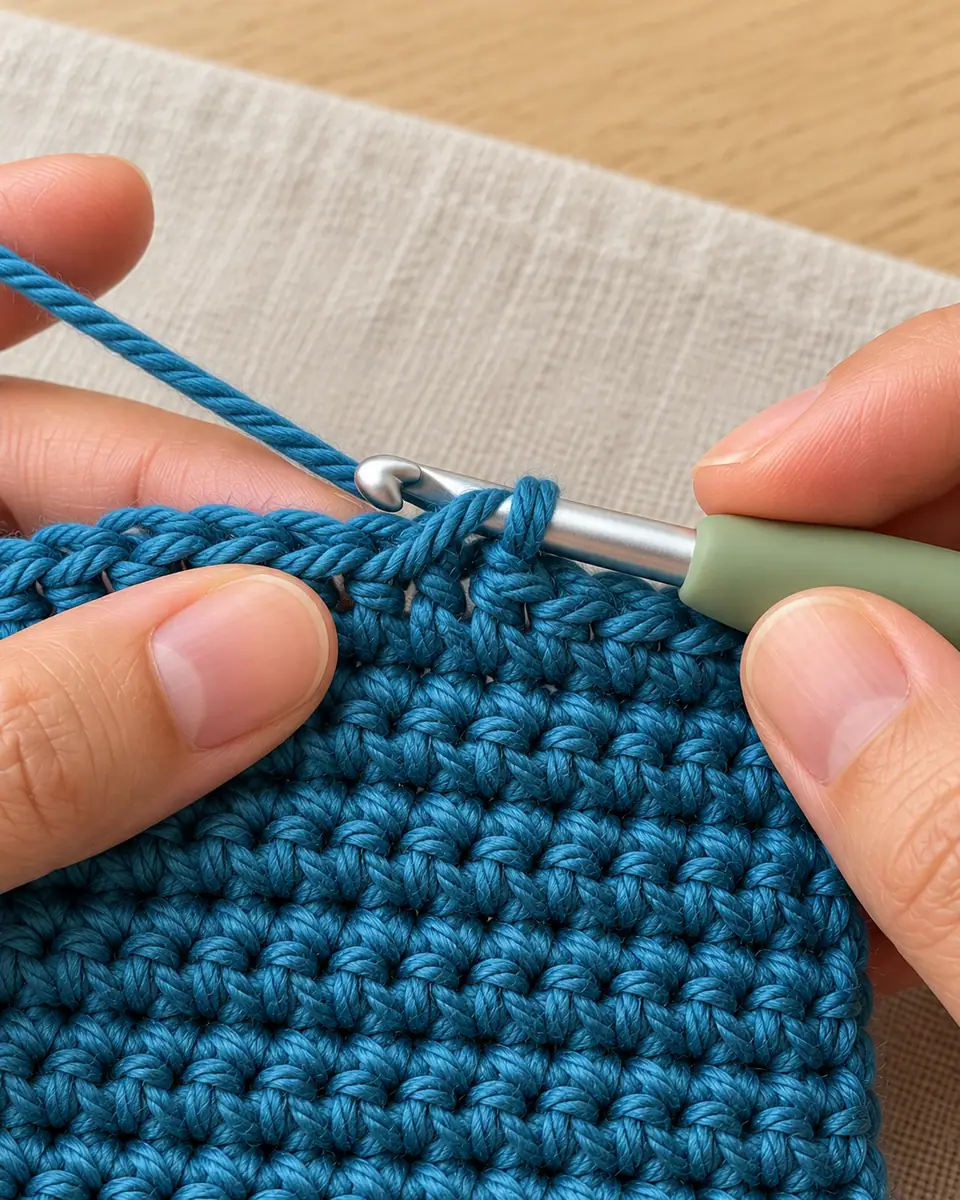
- Insert the hook. With one loop on the hook, push the hook from front to back under both top loops of the next stitch (the little sideways V).
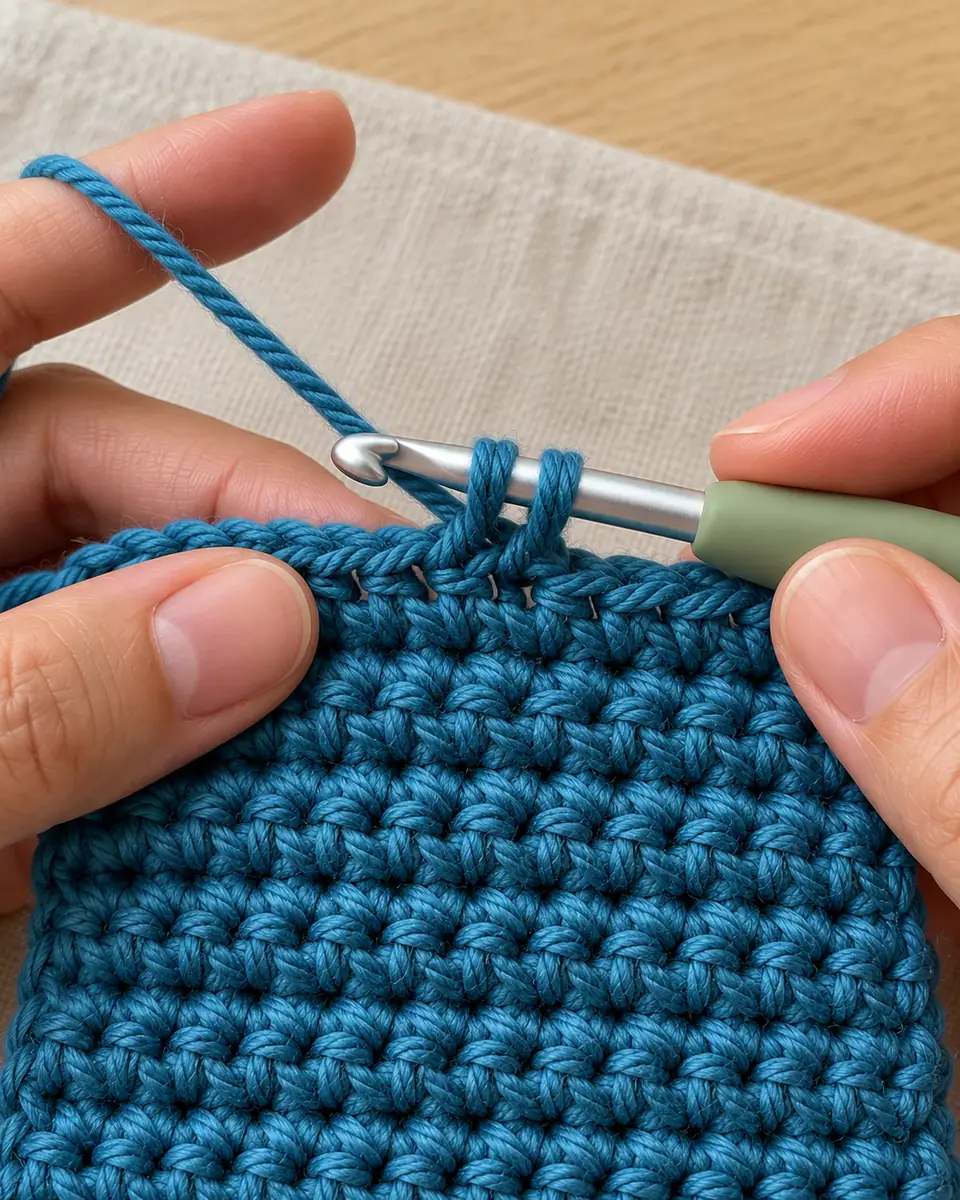
- Pull up a loop. Wrap the yarn over the hook from back to front (a yarn over) and draw it back through the stitch. You now have two loops on the hook.
- Pull through both loops. Yarn over again and draw the yarn through both loops at once. One loop is left on the hook and one stitch is finished.
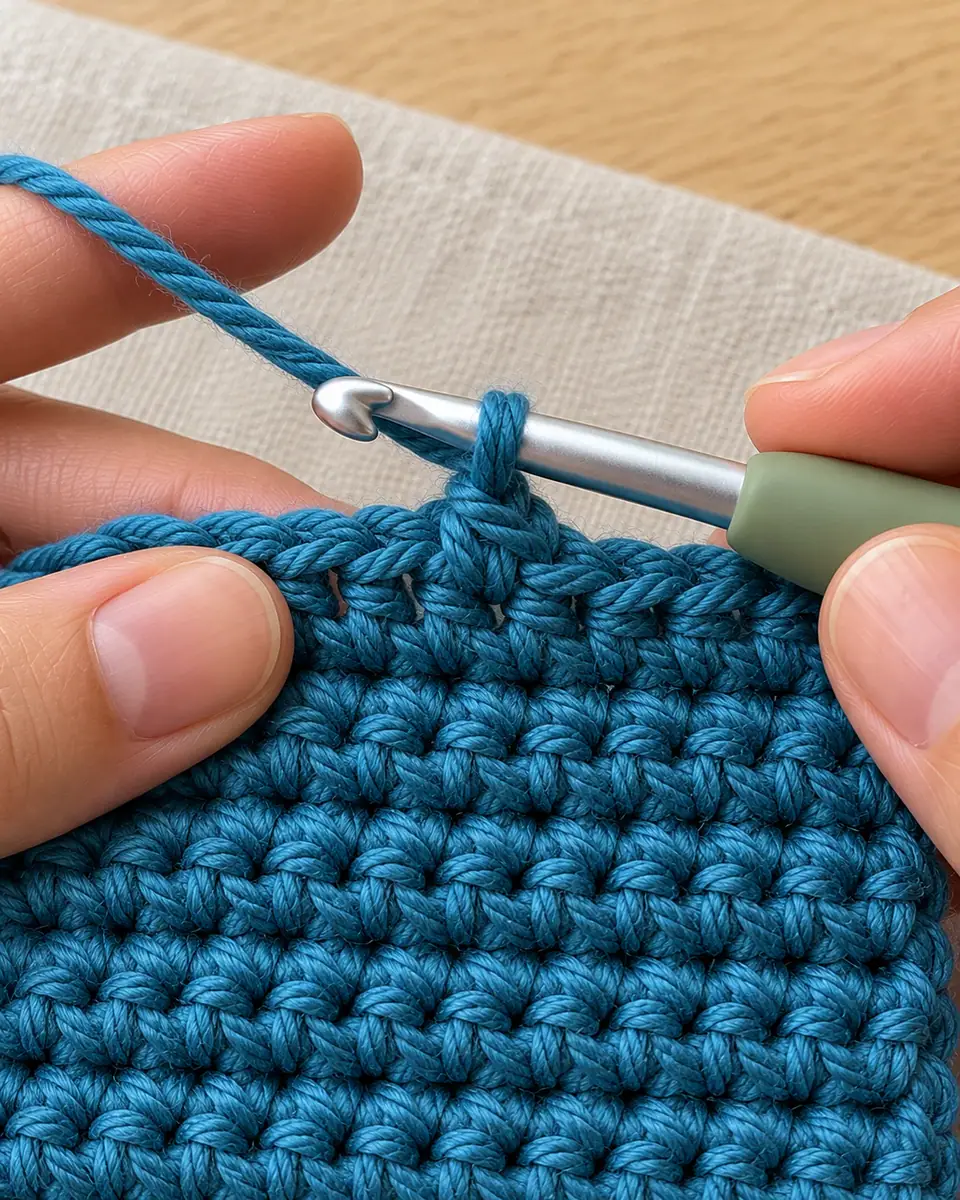
Keep the loop on the hook sitting on the full width of the shaft, not squeezed into the narrow throat near the tip. That one habit decides your stitch size more than how hard you pull the yarn.
The First Row and the Turning Chain
Into the foundation chain. Skip the first chain next to the hook and work the first stitch in the 2nd chain from the hook, then one in each chain to the end. A chain of 16 gives you 15 stitches. Most people go under the top loop and the back bump of each chain, which leaves a neat V along the bottom edge.
Chain 1 and turn. At the end of the row, make one chain and turn the work like the page of a book. That chain lifts the yarn to the height of the next row. Here it does not count as a stitch, so the first stitch of the new row goes into the very first stitch, right at the base of the chain.
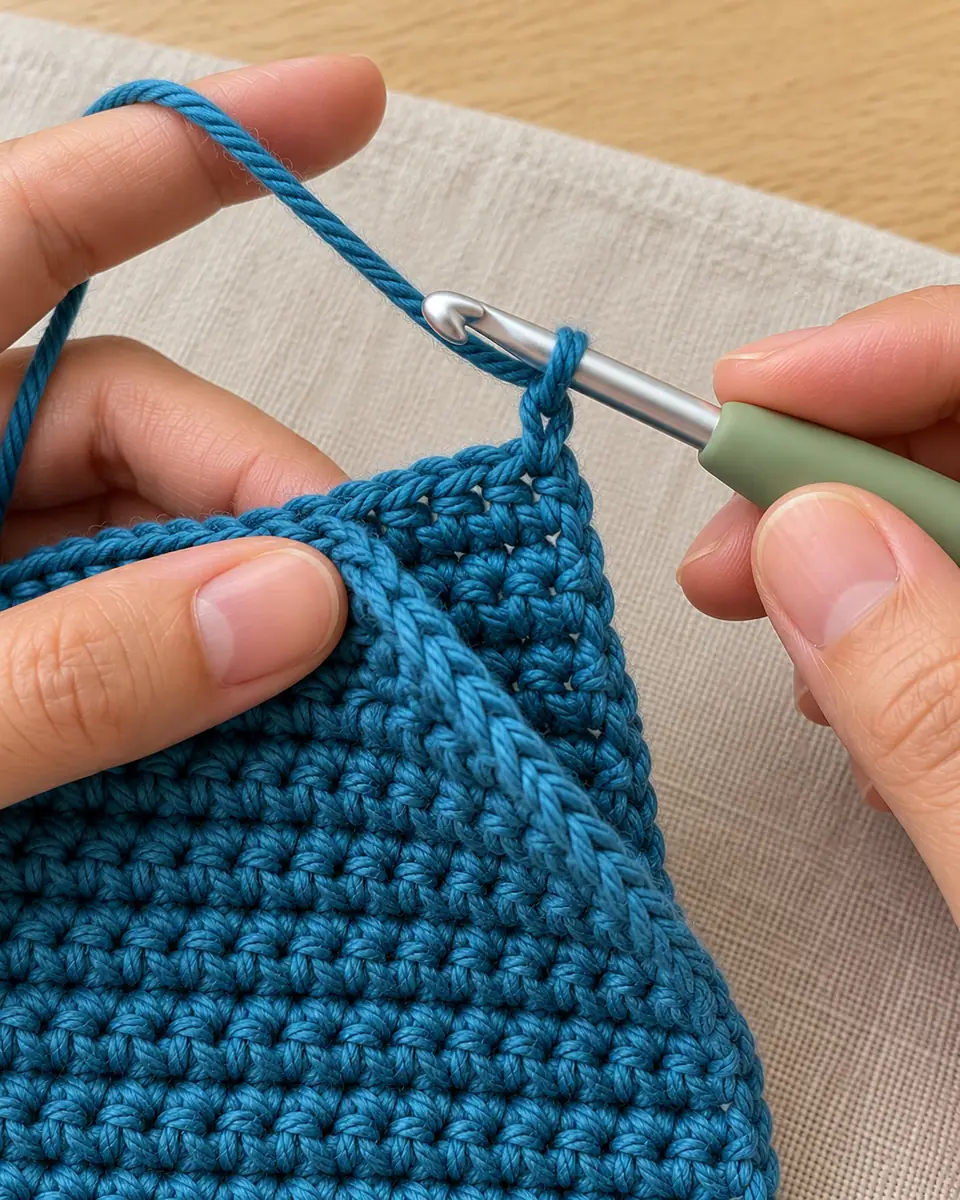
The last stitch. Work the last stitch into the last stitch of the row below. It hides under the turning chain of the previous row and is the one beginners miss most often.
How to Recognise and Count the Stitches
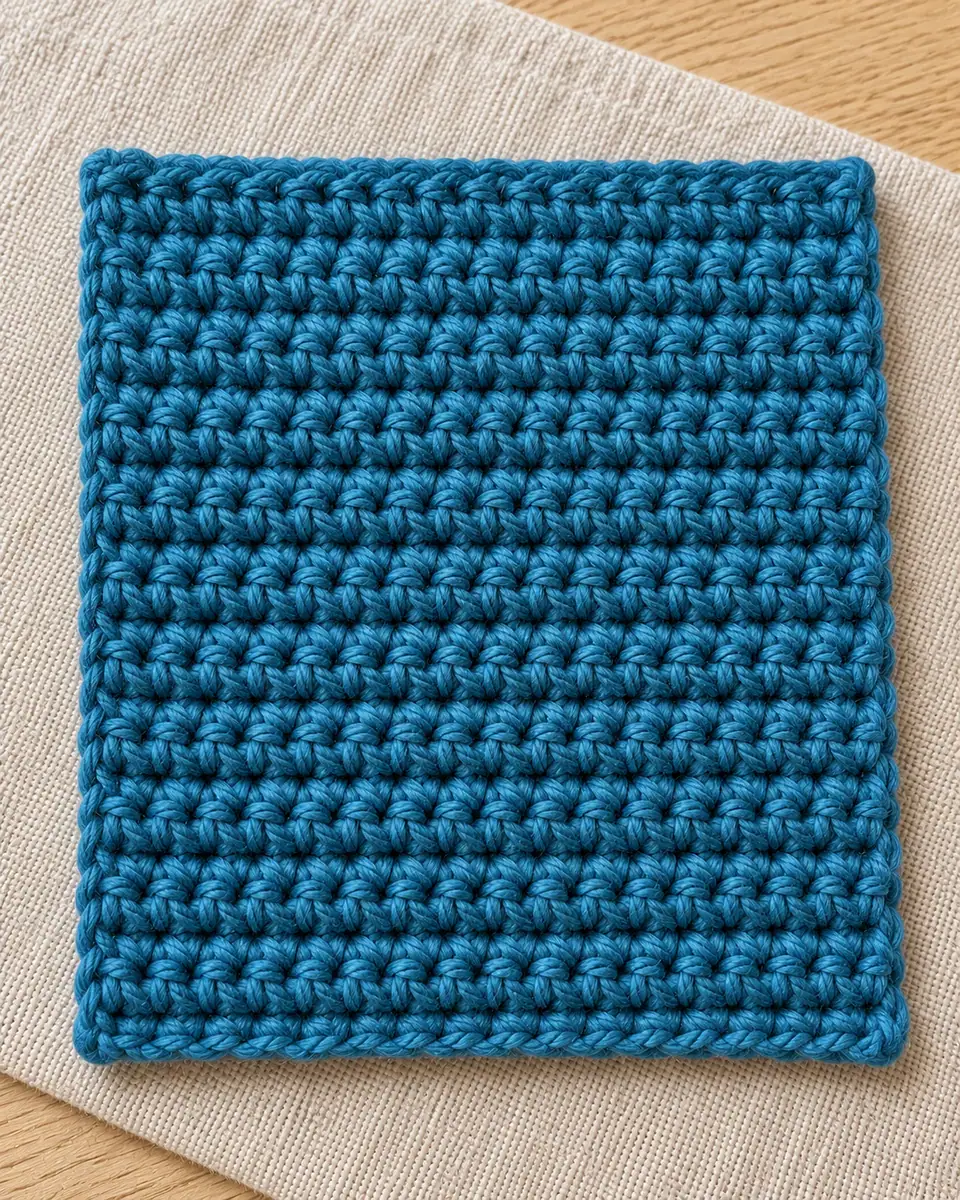
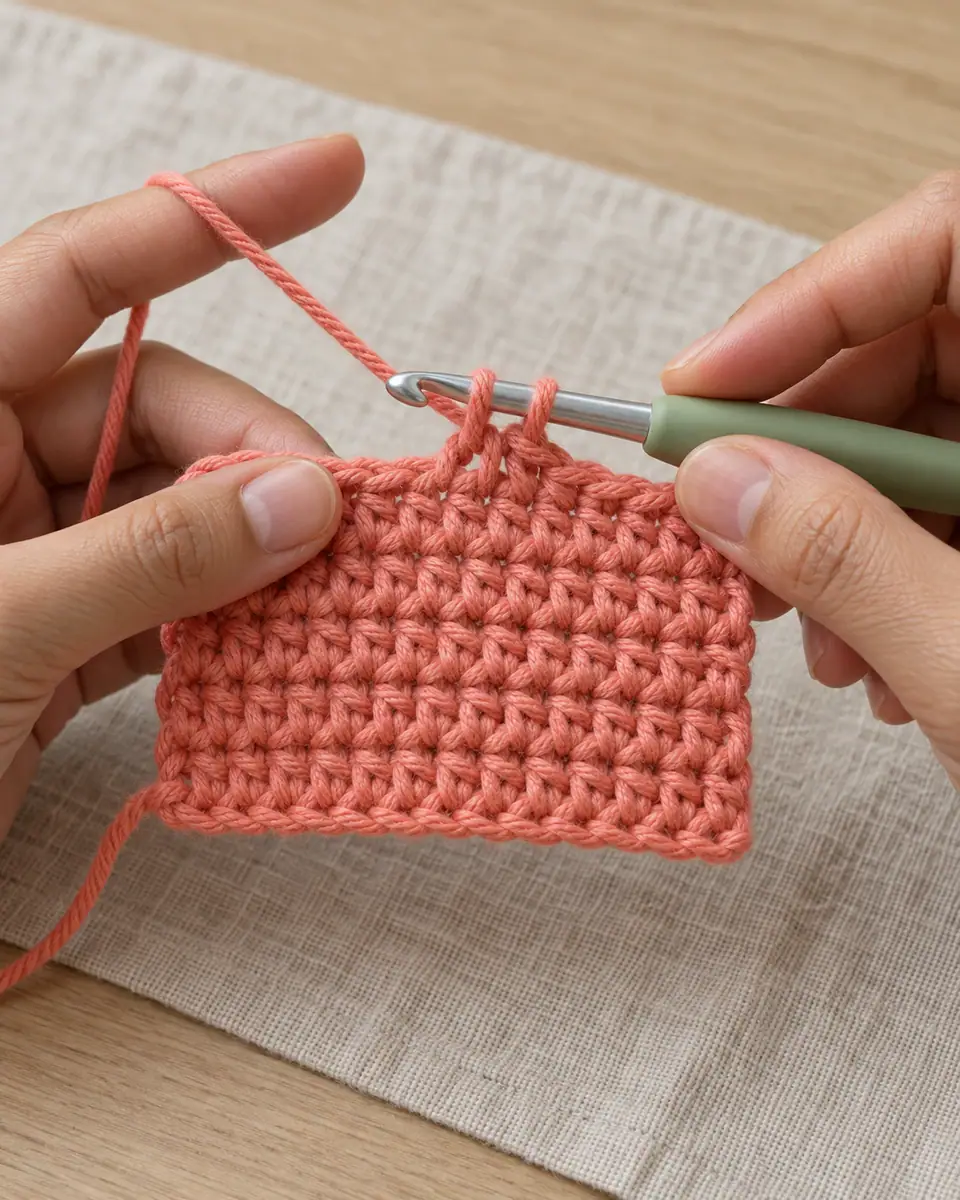
Look at the top edge: every stitch has a sideways V lying flat on top. Count the Vs, never the loop on your hook. Down the side of the work, each row is about as tall as one chain, so rows are easy to count in pairs: one row shows the front of the stitches, the next the back.
Worked back and forth, it makes a dense, firm fabric with a slightly bumpy texture. That firmness is why amigurumi, bags and baskets are worked in it.
Common Mistakes and How to Fix Them
- The piece gets narrower. You are skipping the last stitch of the row. Put a stitch marker in the first stitch of each row; when you come back, the marker shows you the last stitch.
- The piece gets wider. You worked into the turning chain, or twice into the first stitch. Count at the end of every row until it becomes automatic.
- The edges look wavy or loose. The turning chain is too tall. Make it snug, and turn the work the same way every time.
- The stitches are too tight to get into. Pull up the loop in step 2 to the shaft of the hook before you finish the stitch. If it is still a struggle, go up half a hook size.
- The foundation chain pulls the bottom edge in. Chains are often tighter than stitches. Make the chain with a hook one size larger, then switch back.
US Single Crochet vs UK Terms
The stitch in this lesson uses its US name, abbreviated sc. In UK patterns the same stitch is called a double crochet (dc), and a UK pattern has no stitch by that name at all. If a pattern does not say which terms it uses, look for the word “treble”: UK patterns use it all the time. The US ⇄ UK stitch converter swaps every name in a pattern for you, and how to read crochet patterns explains the abbreviations.
Variations to Learn Next
- Back loop or front loop only (BLO / FLO). Insert the hook under just one of the two top loops. The unworked loops form a ridge; in rows worked in BLO the fabric turns ribbed and stretchy.
- Foundation single crochet (fsc). Builds the chain and the first row at the same time, so the bottom edge stretches as much as the stitches. Ch 2, insert in the 2nd ch from the hook and pull up a loop, yarn over and pull through one loop (this is the “chain”), yarn over and pull through both loops. For the next one, insert under the two loops of that chain and repeat.
- Extended single crochet (esc). Insert, pull up a loop, yarn over and pull through one loop, then yarn over and pull through two. It is a little taller and softer than a plain sc.
- Reverse single crochet. Also called crab stitch: sc worked from left to right (for right-handed crocheters) along the edge, on the right side, without turning. It makes a twisted, corded border; see the crochet edging lesson.
Working in Rounds
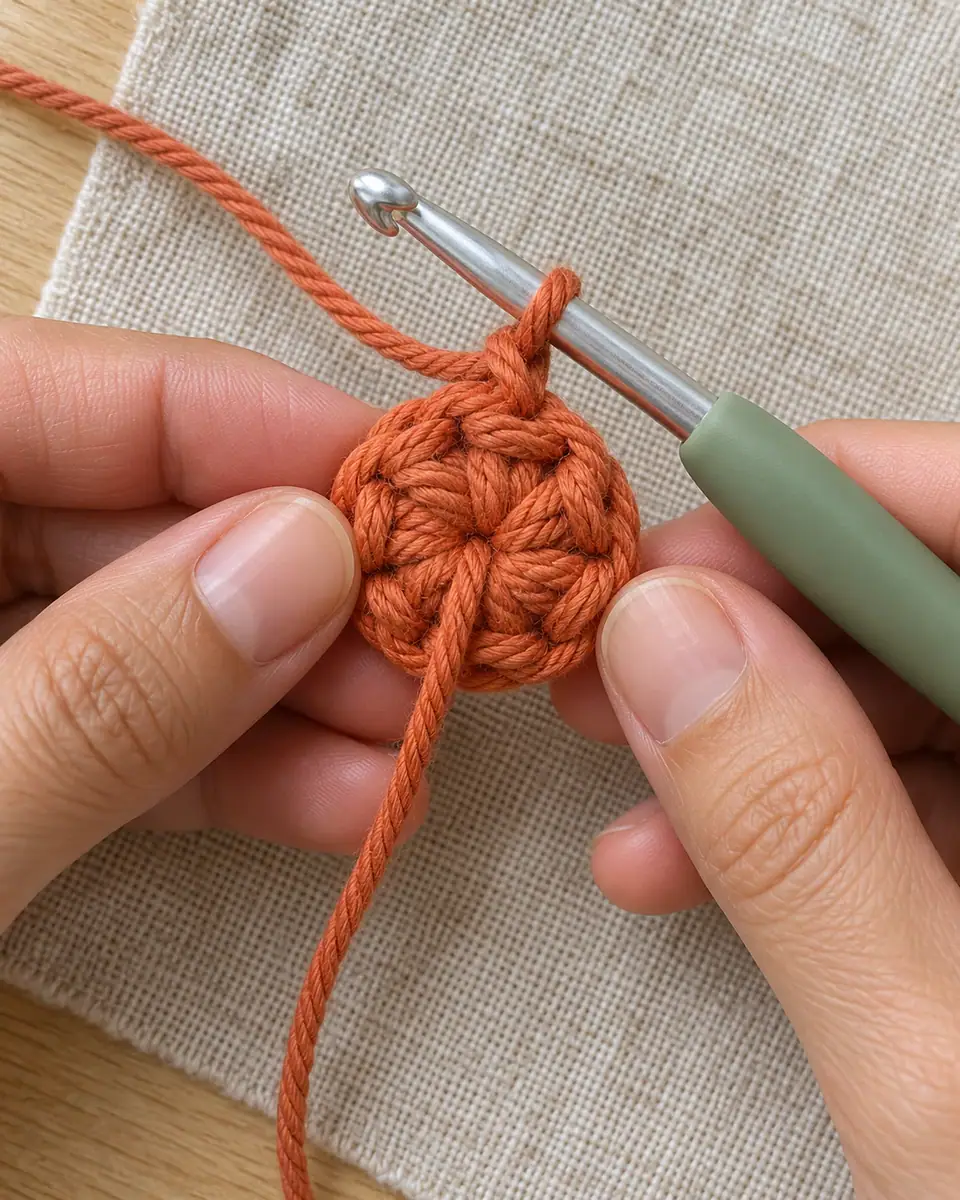
Amigurumi is single crochet worked in a continuous spiral. You start with a magic ring, do not join the rounds, and move a stitch marker up to the first stitch of every round. Two sc in one stitch make an increase; working two together makes a decrease. Both are explained in increases and decreases (sc2tog).
Patterns to Practice On
- Chubby crochet bunny: worked in a spiral, with increases, invisible decreases and one round in back loops only.
- Crochet tote bag: a flat oval base and a five-round band of sc at the top.
- Crochet Christmas tree: a cone worked in rounds of sc.
Once this stitch feels easy, move on to the taller stitches: half double crochet, double crochet and treble crochet. All the lessons are in Learn to Crochet.
Frequently Asked Questions
How to single crochet?
Insert the hook in the next stitch, yarn over and pull up a loop (two loops on the hook), then yarn over and pull through both loops. Repeat in each stitch across the row.
How to start a single crochet row?
Chain 1 and turn, then work the first sc into the first stitch, right at the base of that chain. On the very first row, start in the 2nd chain from the hook.
How to do a single crochet stitch in the round?
Work it exactly the same way, but keep the right side facing you and do not turn. For amigurumi, keep going in a spiral and mark the first stitch of each round.
Does the chain 1 count as a stitch?
No. Here the turning chain only raises the yarn to the next row, so the first stitch goes into the first stitch of the row below.
Why is my crochet piece shrinking?
You are almost certainly missing the last stitch of each row, the one tucked under the turning chain. Mark it, or count at the end of every row.
Is single crochet the same as UK double crochet?
Yes. They are the same stitch with two names, so always check which terms a pattern uses.

Clara Parker
I’m Clara — a mom who is never without a hook, and the crochet half of the Recipes Dad family. I write cozy, practical patterns you can actually finish.
More about Clara
Maker notes
Made this pattern? Tell us about your yarn and colors, or ask a question about a row — Clara reads every note.